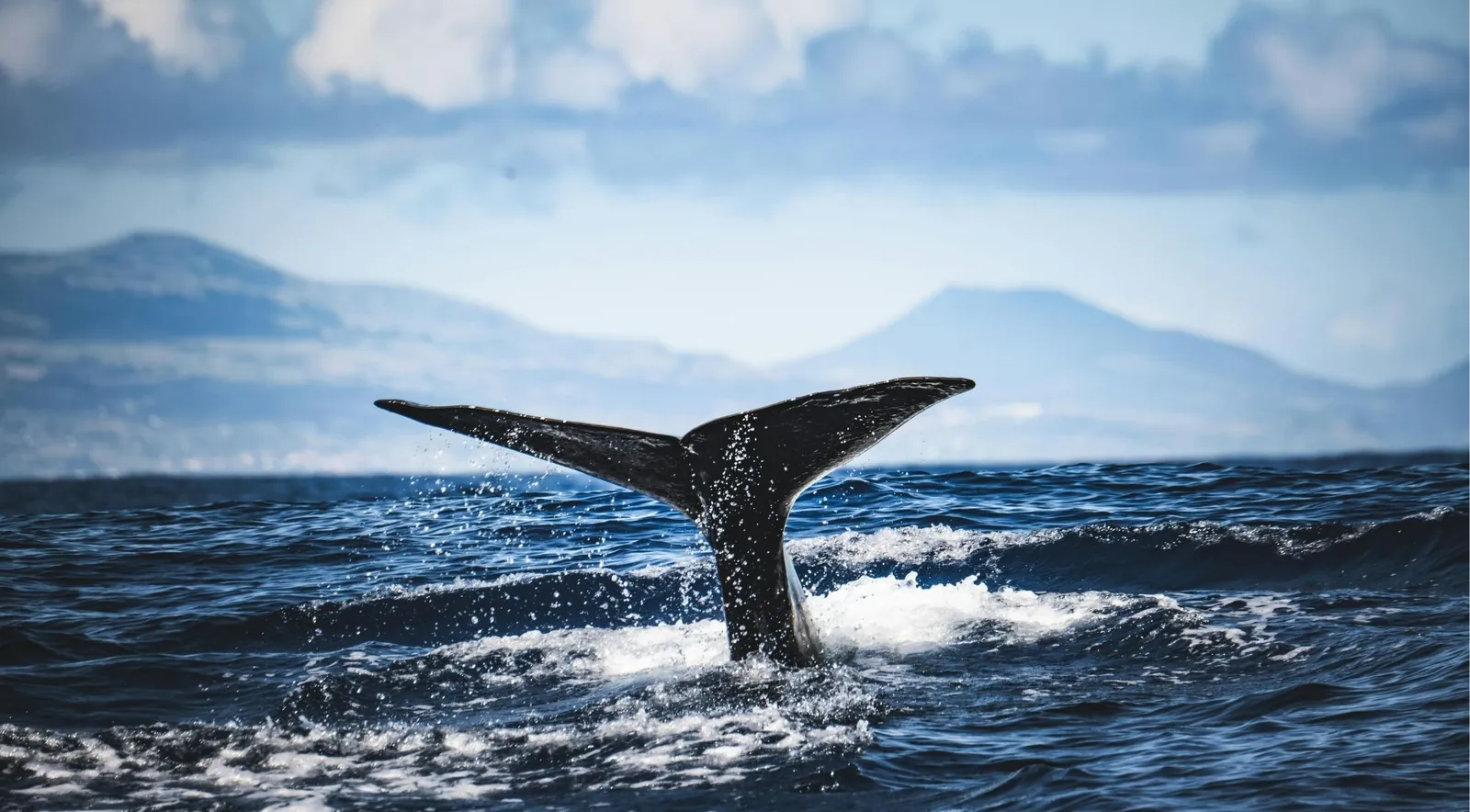
The short version
- Season: roughly April–October, with the peak June to September (90–98% sighting rates).
- Best window: mid-summer (July–August) for multiple species, warmest weather and calmest seas; spring (March–May) for gray whales; September–early October for acrobatic humpbacks and thinner crowds.
- Headline species: Bigg's (transient) orcas and humpbacks, plus seasonal gray and minke whales.
- Departures: mostly Steveston (Richmond) or Granville Island; tours run 3–5 hours by Zodiac or covered catamaran.
The Whale Species You Can See Near Vancouver
Orcas / killer whales. Orcas are the marquee attraction and can be seen in BC year-round. Two very different kinds share local waters. Bigg's (transient) killer whales are mammal-eaters — hunting seals, sea lions and porpoises — and travel in smaller, less predictable groups; they are increasingly abundant and are now the orca you're most likely to see. Southern Resident killer whales are salmon specialists, travel in large family pods (J, K and L), and are critically endangered — just 74 individuals as of the July 2025 census. Commercial whale-watching tours do not target them.
Humpback whales. Humpbacks have made a remarkable comeback in the Salish Sea. They're typically present from April/May through fall, with peak sightings May through September and spectacular surface behaviour — breaching, tail slaps, lunge feeding — often on display in autumn.
Gray whales. Gray whales pass BC during their northbound migration, with the best viewing window March through May. They make one of the longest migrations of any mammal — roughly 10,000 miles round-trip.
Minke whales. Present year-round but seen most often May through October — small, fast, solitary baleen whales roughly 7–10 m long.
Other wildlife. Tours routinely encounter Steller and California sea lions, harbour seals, Dall's and harbour porpoises, Pacific white-sided dolphins, bald eagles and abundant seabirds.
Month-by-Month Whale Watching in Vancouver
- January–February: Off-season. Most dedicated Vancouver tours pause, though Bigg's killer whales and seabirds remain present.
- March: The season awakens. Gray whales begin migrating north and Bigg's orcas become more active. Quieter, cooler, fewer crowds.
- April: Tours resume from Steveston and Granville Island. Gray whales still moving north; Bigg's orcas common; first humpbacks returning.
- May: Activity ramps up. Bigg's killer whales more frequent, humpbacks back from wintering grounds, minke whales appear.
- June: Start of peak season. Long days, mild weather, multiple species. Humpbacks and orcas regularly seen.
- July: Peak. Warmest weather, calmest seas, nearly guaranteed sightings, multiple species on a single tour.
- August: Peak continues — often cited as the single best month, with a second annual Bigg's peak (August–September).
- September: Excellent and less crowded. Humpbacks dominate with dramatic surface behaviour; strong Bigg's presence.
- October: Season winds down but humpback viewing remains excellent in early October. Fewer boats, beautiful autumn light.
- November–December: Off-season; most tours pause. Wildlife still present but limited tour availability.
Key Whale Watching Locations Near Vancouver
Steveston (Richmond). A historic fishing village about 30–40 km south of downtown, at the mouth of the Fraser River. It's the departure point for many of Metro Vancouver's operators and sits roughly 30 km closer to where whales usually are — meaning less transit and more time with wildlife.
Granville Island / downtown Vancouver. The most convenient option for downtown visitors and cruise passengers. The trade-off is a slightly longer boat transit to the whale grounds.
The Salish Sea, Strait of Georgia and Gulf Islands. This is where tours actually go. Boats head south through the Strait of Georgia toward the Gulf and San Juan Islands. A 2025 study highlighted how vital these waters are: roughly 70% of the coastal Bigg's population regularly uses the Salish Sea, now present on average around 250 days a year.
Boats: Zodiac vs. Covered Vessel
Open / semi-covered Zodiacs. Fast, nimble, rigid-hull inflatable boats that sit you close to the waterline for an exhilarating, intimate ride. Passengers wear full-body flotation "mustang" suits for warmth and safety. Best for thrill-seekers.
Covered catamarans / vessels. Larger, more stable boats with heated indoor cabins, washrooms, multiple viewing decks and panoramic windows. Ideal for families, seniors, anyone sensitive to motion sickness, and cooler or rainy-weather tours.
Most tours run 3–5 hours and are led by trained naturalists who provide marine biology and conservation commentary.
Orca Pods of the Salish Sea: A Tale of Two Populations
Southern Resident killer whales (endangered, declining). This salmon-eating population numbered just 74 whales as of the July 2025 census — 27 in J pod, 14 in K pod and 33 in L pod. They were listed as endangered in Canada (2003) and the U.S. (2005). Commercial whale-watching tours do not target them.
Bigg's / transient killer whales (thriving, increasing). These mammal-eaters have boomed as seal and sea lion populations recovered. The Georgia Strait Alliance reports roughly 400 individuals, sighted on 342 days in 2025. What was once a rare sighting is now a near-daily event.
Whale Watching by the Numbers
- 74 — Southern Resident killer whales (July 2025 census, Center for Whale Research).
- 342 days — Bigg's killer whales sighted in the Salish Sea in 2025 (PWWA).
- 50,323 — wildlife reports logged across the Salish Sea in 2025, up 12% from 2024 (PWWA).
- 90–98% — sighting success rates advertised by Vancouver operators, most with a free-return guarantee.
Practical Tips for Your Tour
- Dress in layers and expect cold: it's much cooler on the open water than on shore, even in summer. Wear moisture-wicking base layers, a fleece mid-layer and a windproof/waterproof outer jacket; bring a hat and gloves for early mornings.
- Footwear: non-slip closed-toe shoes; skip flip-flops.
- Sun protection: sunscreen, polarized sunglasses and a brimmed hat.
- Seasickness: take medication about an hour before departure if you're prone to motion sickness.
- Bring: a camera with extra batteries, a zoom lens, binoculars and a dry bag for electronics.
- Booking: reserve at least a week ahead — and 2–4 weeks in peak summer. Don't book your last day in town, so you can use the sighting guarantee if needed.
Recommendation: for the best all-around experience, book in July or August for the highest odds of multiple species, warmest weather and calmest water. Go in March–April for gray whales, or September–early October for the best humpback acrobatics and fewer crowds. Choose a covered catamaran with young kids, seniors or anyone prone to seasickness; choose a Zodiac for a faster, closer, more thrilling ride.