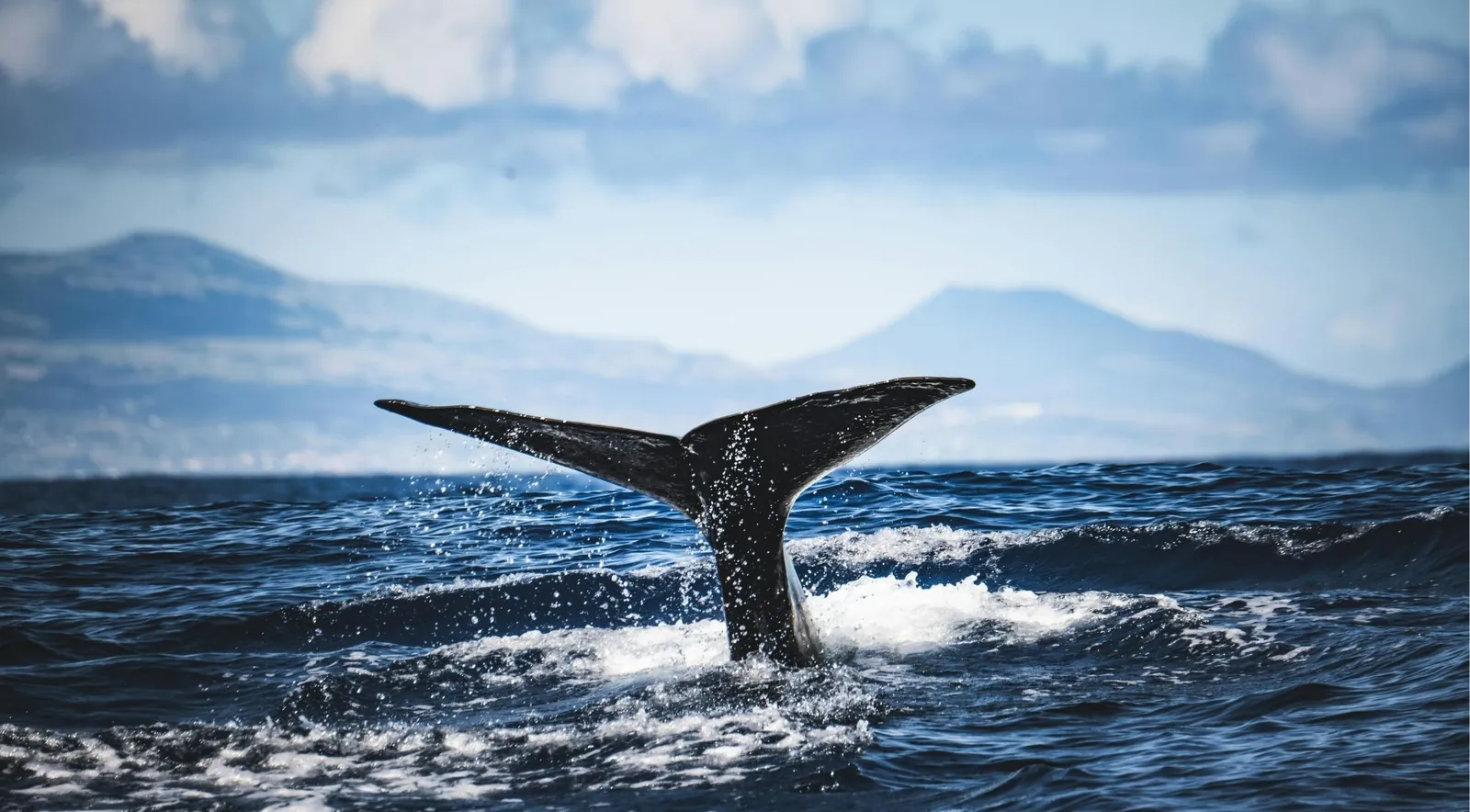
Vancouver whale watching tours mainly run from spring through fall, with exact dates varying by operator. Bigg's killer whales can be found in the Salish Sea throughout the year, and were reported on 342 days in 2025. The season matters more for which other species are around, and for how many Vancouver departures run.
If your dates are flexible, July and August offer the best overall balance for a first trip. Operators run their fullest schedules, the weather is at its warmest, and humpbacks, orcas and minke whales can all be present. Vancouver Whale Watch, for example, runs two Steveston departures a day from late June through August, dropping back to one in September.
For gray whales, spring is the season: the northbound migration is strongest from roughly March through May. September and October remain very good for humpbacks, which are often still feeding in the Salish Sea before migrating south. There are fewer visitors in the city than in summer, although some operators reduce departures as fall progresses.
Vancouver tours largely stop for winter, but the whales do not disappear. If you are visiting from November to February, SpringTide's zodiac trip from Victoria has dates all winter. The covered boats you can book online stop for the season, so expect an open boat and a flotation suit unless you arrange a heated winter trip directly with a Victoria operator.
Free cancellation · or check live dates in the calendar below
- Best overall first trip
- July and August
- Gray whale migration
- March to May
- Humpbacks, fewer city visitors
- September and October
- Bigg's orcas
- Possible year-round in the Salish Sea
- Widest Vancouver schedule
- Late June to August
- Winter whale watching
- Victoria, by open zodiac
- Most useful live checks
- Departures, wind, waves
- 342 daysBigg's orcas reported in the Salish Sea, 2025
- Mar/Apr – Oct/NovVancouver tour season, depending on operator
- 72°F (22°C)July and August average high in Vancouver
July and August are also the months when Vancouver has the most overnight visitors, about 1.5 million in August 2025 against about 1 million in September. That's a city-wide tourism figure, not a count of whale watching passengers, but the most popular sailings can sell out, so book as early as your plans allow.
In April and May there are fewer departure times to choose from: Wild Whales Vancouver, Vancouver Whale Watch and Seabreeze Adventures each run one trip a day per boat until late May or mid-June. Some operators reduce departures again from September: the two Steveston companies go back to a single midday trip early in the month, and Wild Whales Vancouver at the end of it. The Vancouver tour season as a whole runs from March or April to October or November, depending on the operator.
On this page
Check Your Travel Dates
Pick your travel date to see which Vancouver tours are running, which whales are likely, and the conditions on the water. Dates inside the next 16 days show a live forecast for the hours tours sail; beyond that, the card shows 30-year averages for the month.
Wind, waves and rain on the day decide how comfortable a 3–5 hour trip is. Pick a date above for a live forecast, or check the marine forecast for the Strait of Georgia, south of Nanaimo closer to the day.
- Bigg's orcas: very likely
- Humpback whales: very likely
- Minke whales: possible
July has the most departures a day at the Vancouver and Steveston operators, with humpbacks and minke whales in season alongside the orcas.
Monthly temperature and rainfall are Environment and Climate Change Canada's 30-year averages for Vancouver, not a forecast, and rain is a monthly total rather than a daily rate. Live figures for a chosen date come from Open-Meteo's forecast and marine models, taken over 9am to 6pm and for the Strait of Georgia, and reach about 16 days ahead. Species notes come from the Pacific Whale Watch Association's 2025 sighting days, and schedules from the operators' own 2026 pages. See How we know.
What You'll See, and When
Four whales are the reason people book a Vancouver tour, and each keeps its own calendar.
Bigg's (transient) killer whales are the whale you're most likely to see. They live in the Salish Sea through every season and have become far more common over the past few decades: a 2026 study of Washington waters found their chance of being detected rose from about 4% in 1978 to about two-thirds by 2022. In 2025 they were reported on 342 of the year's 365 days, and for the seventh year running on every day of August. Whichever month you book, this is the whale reported on the most days.
Humpback whales almost disappeared from these waters in the 20th century and have returned in large numbers since the 2000s. They're usually here from May to October, feeding before the long swim to Mexico or Hawaii for winter, and were reported on 314 days in 2025. They are still feeding in the Salish Sea into the fall, and Destination Vancouver describes September and October as a strong window for sightings, with breaching and tail-slapping often reported.
Gray whales pass BC waters on one of the longest migrations of any mammal, roughly 10,000 miles round trip, heading north from Mexico toward Alaska. The Pacific Whale Watch Association puts the gray whale peak at February through May, and Prince of Whales gives March through May as the best window as they travel north past Vancouver Island. Destination Vancouver names April and May for Vancouver itself, once most operators are running. They were reported on 147 days in 2025. Outside spring they're rarely seen here, so a summer trip is not a substitute if gray whales are the goal.
Minke whales are smaller, faster and more solitary. A few are around in every season, but they're seen most often from May to October, with 154 reported days in 2025.
Southern Resident killer whales also pass through, but commercial tours don't target them: see the orca section below for why.
Other Things to Add to Your Vancouver Itinerary
Pair your whale watching trip with the city's other top-rated experiences — from Stanley Park and Granville Island to the Capilano Suspension Bridge and day trips to Victoria.
Month by Month
Winter (December to February). The Vancouver and Steveston operators are closed. Bigg's orcas are still around, with 252 sightings logged in the Salish Sea across November, December and January of 2025, and you can see them from Victoria. On GetYourGuide the winter fleet there is open zodiacs: SpringTide's three-hour zodiac trip has dates on every day of December, January and February, rated 4.9 from 320 reviews, and Orca Spirit lists an open-vessel tour that runs only from November to March. Victoria's covered and semi-covered boats, including Prince of Whales' catamaran and Eagle Wing's, come off sale there from early November until March, so a trip booked online means a flotation suit rather than a heated cabin. Orca Spirit sells a heated, semi-covered winter tour direct on its own site. Our guide to winter whale watching in Canada compares Victoria, Nanaimo, Sooke and Tofino from November to March.
March. Prince of Whales publishes a season starting in March from Granville Island, while the other Vancouver operators are still closed. The northbound gray whale migration is under way.
April and May. Wild Whales Vancouver, Vancouver Whale Watch and Seabreeze Adventures open in April, with one midday trip per boat. This is the usual gray whale window. Humpbacks start returning, and May was one of Bigg's orcas' busiest months in 2025. Wild Whales Vancouver adds a second daily trip per boat from May 23.
June to August. The Steveston operators add morning and afternoon trips in mid-June, so most boats run twice a day through August. Bigg's orcas, humpbacks and minke whales are all regularly seen, sometimes on the same tour. Bigg's orcas were reported on every day of August 2025.
September and October. Some operators reduce their daily departures from September onward: Vancouver Whale Watch and Seabreeze Adventures go back to one midday trip early in the month, and Wild Whales Vancouver from September 28. Humpbacks are still feeding in the Salish Sea before migrating south, and Vancouver has fewer visitors than in summer. October is much wetter than September.
November. Most operators finished at the end of October. Prince of Whales publishes a season that runs into November from Granville Island.
| Month | Vancouver tours | Avg high / low | Rain | Likely species |
|---|---|---|---|---|
| January | Closed (Victoria zodiacs run) | 44°F / 35°F (7°C / 1°C) | 6.9 in (174 mm) | Bigg's orcas |
| February | Closed (Victoria zodiacs run) | 46°F / 35°F (8°C / 2°C) | 3.6 in (91 mm) | Bigg's orcas |
| March | Prince of Whales only | 50°F / 38°F (10°C / 3°C) | 4.2 in (106 mm) | Bigg's orcas, gray whales arriving |
| April | One trip a day per boat | 56°F / 42°F (13°C / 6°C) | 3.4 in (86 mm) | Gray whales, Bigg's orcas, humpbacks returning |
| May | One a day, more from May 23 | 62°F / 48°F (17°C / 9°C) | 2.3 in (59 mm) | Gray whales, Bigg's orcas, humpbacks |
| June | More trips from mid-June | 67°F / 53°F (20°C / 12°C) | 2.0 in (51 mm) | Bigg's orcas, humpbacks, minke whales |
| July | Two or more a day | 72°F / 57°F (22°C / 14°C) | 1.3 in (34 mm) | Bigg's orcas, humpbacks, minke whales |
| August | Two or more a day | 72°F / 57°F (22°C / 14°C) | 1.4 in (36 mm) | Bigg's orcas (every day in 2025), humpbacks, minke whales |
| September | Fewer trips from early Sept. | 66°F / 52°F (19°C / 11°C) | 2.0 in (52 mm) | Humpbacks, Bigg's orcas |
| October | One trip a day per boat | 56°F / 45°F (14°C / 7°C) | 4.9 in (124 mm) | Humpbacks, Bigg's orcas |
| November | Prince of Whales only | 49°F / 38°F (9°C / 4°C) | 6.9 in (175 mm) | Bigg's orcas |
| December | Closed (Victoria zodiacs run) | 44°F / 34°F (7°C / 1°C) | 6.8 in (172 mm) | Bigg's orcas |
Weather: Environment and Climate Change Canada's 30-year averages for Vancouver (full source in How we know). Rain is a monthly total, not a daily rate or a wet-day count. Tour schedules: the 2026 season pages of Prince of Whales, Wild Whales Vancouver, Vancouver Whale Watch and Seabreeze Adventures, checked September 15, 2026. Taken together they run from March or April to October or November, depending on the operator, and schedules can change from year to year.
Granville Island or Steveston?
Granville Island. The easiest option for downtown visitors and cruise passengers: a short walk, transit ride or water-taxi hop from most hotels. The trade-off is a longer boat ride out to open water.
Steveston. A historic fishing village about a 35-minute drive south of downtown, at the mouth of the Fraser River. Boats reach open water sooner from here, and the village itself is good for an hour of fish and chips before or after your tour.
The Strait of Georgia and Gulf Islands. This is where the tours go: south and west from Vancouver toward the Gulf and San Juan Islands, in the stretch of the Salish Sea where Bigg's orcas are now reported on most days of the year.
Zodiac or Covered Catamaran?
Zodiacs sit you close to the waterline for a fast, intimate ride, with the most sea spray. Full-body flotation suits are provided for warmth. Best for people who don't mind getting splashed.
Covered catamarans and partly sheltered boats are larger and more stable. Prince of Whales' catamarans have a heated cabin with floor-to-ceiling windows and a washroom, and Wild Whales Vancouver's partly sheltered boat has a cabin with large windows plus outdoor viewing at the bow and stern. They're the better choice for families, anyone prone to seasickness, or a cool, wet day in spring or October.
Most tours run 3 to 5 hours with a naturalist guide narrating throughout. Once you've picked a boat, the next question is what time to sail, covered in our guide to morning versus afternoon departures.
Two Very Different Orca Populations
Southern Resident killer whales (endangered). This salmon-eating population stood at 74 whales at the July 2025 census, with a preliminary 2026 count pointing to a small increase pending final confirmation. Listed as endangered in Canada since 2003, they travel in three family pods (J, K and L), and their visits to the Salish Sea have become less predictable: in 2025 they weren't detected here at all in May, June or August. Commercial whale watching tours do not target this population.
Bigg's (transient) killer whales (thriving). These mammal-eaters have increased as seal and sea lion numbers have recovered, and they're now the orca reported most often, on 342 days of 2025, more than any other whale in the region's sighting network.
Practical Tips for Your Tour
- Dress in layers: it's much cooler on open water than on shore, even in summer. Bring a windproof outer layer, plus a hat and gloves for a spring or October trip.
- Footwear: non-slip closed-toe shoes; skip flip-flops.
- Sun protection: sunscreen, polarized sunglasses and a brimmed hat.
- Seasickness: take medication about an hour before departure if you're prone to motion sickness.
- Bring: a camera with extra batteries, a zoom lens, binoculars and a dry bag for electronics.
- Booking: in July and August, book as early as your plans allow. If your tour offers a free return trip when no whales are found, don't book it for your last day in town, so you have time to use it.
How We Know
This guide draws on Environment and Climate Change Canada's 1991–2020 climate normals for the Vancouver Int'l Airport station; the Pacific Whale Watch Association's 2025 Sightings & Sentinel Actions report; monthly sighting data published by the Orca Behavior Institute; the Center for Whale Research's July 2025 Southern Resident census; a 2026 peer-reviewed study of killer whale detections in Washington waters, 1978–2022 (PLOS One); Destination Vancouver's whale watching season guide and its monthly overnight visitor figures for 2025; and the 2026 season and departure pages published by Prince of Whales, Wild Whales Vancouver, Vancouver Whale Watch, Seabreeze Adventures and Eagle Wing Tours, checked September 15, 2026.
What these numbers can't tell you. The sighting-day counts cover the whole area PWWA members work in, around the Salish Sea, and include reports from outside the association as well as from its crews. They show whether a species was reported anywhere that day, not your chances on a particular boat, and they are one year's figures, so the next season will differ. Climate normals are 30-year averages, not a forecast for your travel dates, and rain totals say nothing about how many days were wet. The visitor figures count overnight visitors to Vancouver as a whole, not whale watching passengers. The date checker's live figures come from Open-Meteo's forecast and marine models, which reach about 16 days ahead: they are a forecast, not a promise, and the operator decides on the morning whether the sea allows the trip. Operators set their schedules each year, and prices, ratings and review counts move; the live booking widget is the source of truth.