Wild whales without leaving the city
Granville Island is a short walk or 10-minute Aquabus ride from downtown Vancouver. You're on the water in minutes and back for dinner — no ferry to Vancouver Island, no overnight, no rental car required.
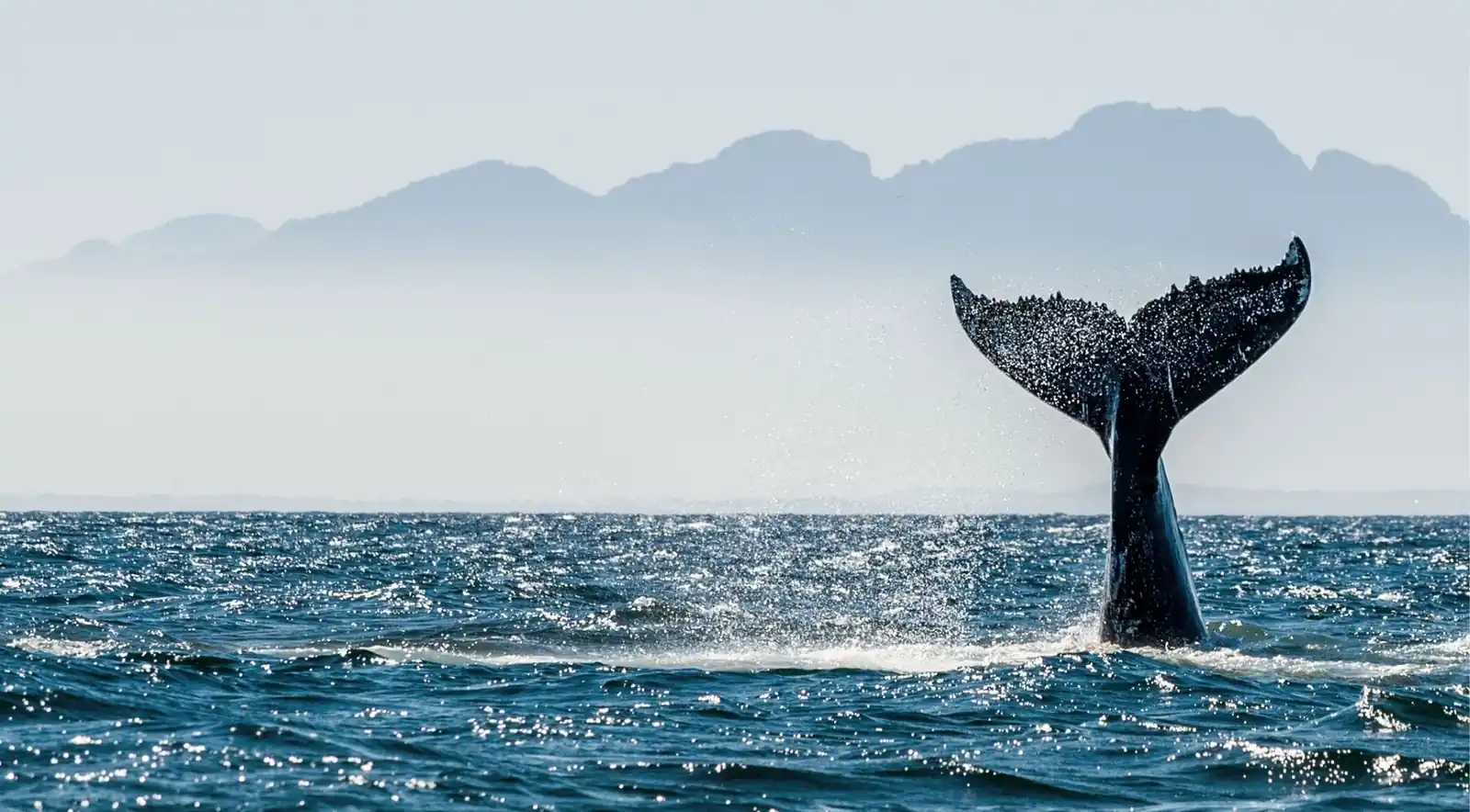
For most first-time visitors, yes — and the reason is logistics. Vancouver is the rare big city where you can leave a downtown café, walk or take the Aquabus to Granville Island, and be scanning the Salish Sea for orcas within the hour. No ferry, no overnight, no separate trip to Vancouver Island. That convenience, more than anything, is why people fold a half-day on the water into a city itinerary.
The water does the rest. The Salish Sea supports 37 mammal species and 250-plus kinds of fish, and it's living through one of conservation's best comebacks: humpbacks, hunted out by the early 1900s, returned to a record 396 individuals in 2022, a lineage largely traced to a single female nicknamed Big Mama. You'll most likely see mammal-hunting Bigg's orcas and humpbacks — not the endangered Southern Residents, which ethical crews stopped watching in 2019. If you want wild whales with the least hassle in British Columbia, start here.
From check-in at Granville Island to the return up False Creek — what happens on the water, stage by stage.
Arrive 30–45 minutes early at the Adventure Centre on Granville Island, beside the public market. Crews fit you for the trip, brief the safety rules, and on Zodiacs hand out flotation suits. The dock is a short walk or a 10-minute Aquabus ride from downtown.
Boats idle past the marinas and under the bridges of False Creek, then open up into English Bay. Your naturalist starts the commentary here — what's been seen in the last few days, which whales are in the area, and how the sighting network shares locations between boats.
It's roughly 60–90 minutes to prime feeding waters in the Strait of Georgia and around the Gulf Islands. The crossing is scenic, not dead time: harbour seals, Steller and California sea lions, porpoises, bald eagles and the Coast Mountains fill the run out.
Once whales are located, the captain eases in and holds the legal distance — 400 m from orcas, 100 m from humpbacks. Engines drop, the deck goes quiet, and you watch Bigg's orcas hunt or humpbacks blow, dive and fluke. Naturalists identify individuals by name and explain what you're seeing.
After time with the animals, the boat turns back toward Granville Island, usually wrapping the trip at 3–5 hours total. Covered catamarans have heated cabins and washrooms for the ride home; Zodiac crews keep watch for one more sighting on the way in.
Pair your whale watching trip with the city's other top-rated experiences — the Stanley Park Seawall, Granville Island Public Market, the Capilano Suspension Bridge, Grouse Mountain and day trips to Victoria and Whistler.
The highest-reviewed whale watching trip in the city — a covered catamaran from Granville Island.
Why we recommend it: it's the highest-reviewed whale watching trip in the city — 4.8/5 from 3,000+ travellers — running on Prince of Whales' covered catamarans with heated cabins, washrooms and a free photo package. It leaves right from Granville Island and carries a sighting guarantee that does not expire.
This is the comfort pick for most visitors. The Salish Sea Dream and Salish Sea Freedom catamarans run 5-hour trips into the Strait of Georgia with naturalist crews, hydrophones to listen for orca calls, and multiple viewing decks. You're scanning for Bigg's orcas, humpbacks, sea lions and bald eagles, with the Coast Mountains behind.
Check in at the Prince of Whales Adventure Centre on Granville Island, next to the Kasandy store and opposite Bridges Restaurant. Check live dates and book below, or read what to know before you book this tour first.
Granville Island departures, free-return guarantees, hydrophones and Coast Mountain views — what sets a Salish Sea trip apart.
Granville Island is a short walk or 10-minute Aquabus ride from downtown Vancouver. You're on the water in minutes and back for dinner — no ferry to Vancouver Island, no overnight, no rental car required.
In peak season operators report 90–98% success, and nearly all offer a free-return trip if the boat finds no whales — often with no expiry. It's the single biggest worry, removed before you board.
Pacific Whale Watch Association boats keep 400 m from orcas and 100 m from other whales, never watch the endangered Southern Residents, and log thousands of protective sentinel actions a year. Guides identify whales by name.
Few whale grounds anywhere frame a breaching orca or a humpback's blow against a city skyline and the Coast Mountains. Even on a quiet whale day, sea lions, seals, porpoises and bald eagles make the trip.
2025 sightings, the record humpback count, the endangered Southern Resident census and the legal viewing distance — the figures behind the trip.
Scroll or drag to browse — orcas, humpbacks, the boats and the Salish Sea backdrop.
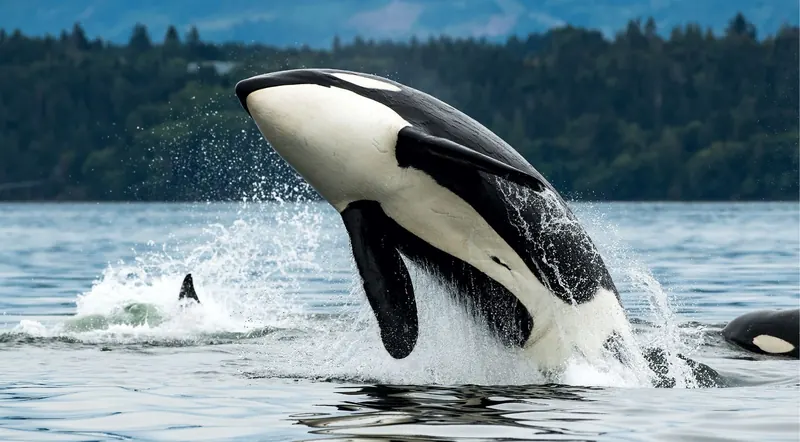
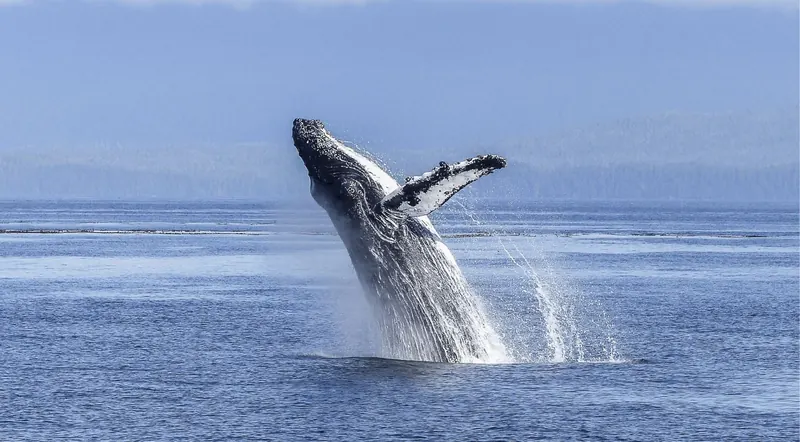
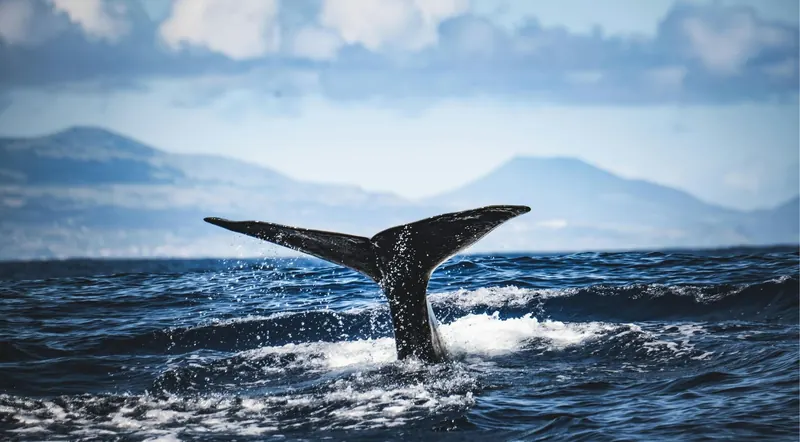
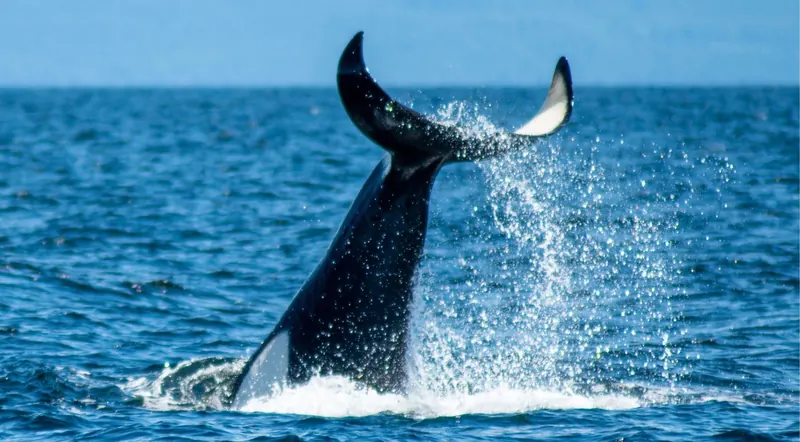
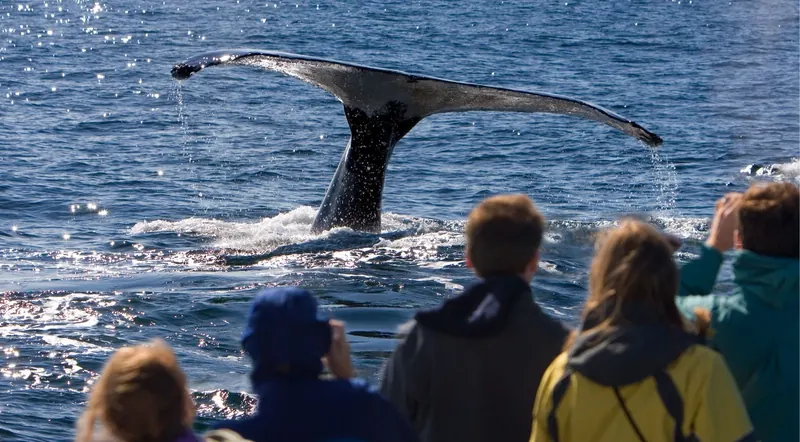
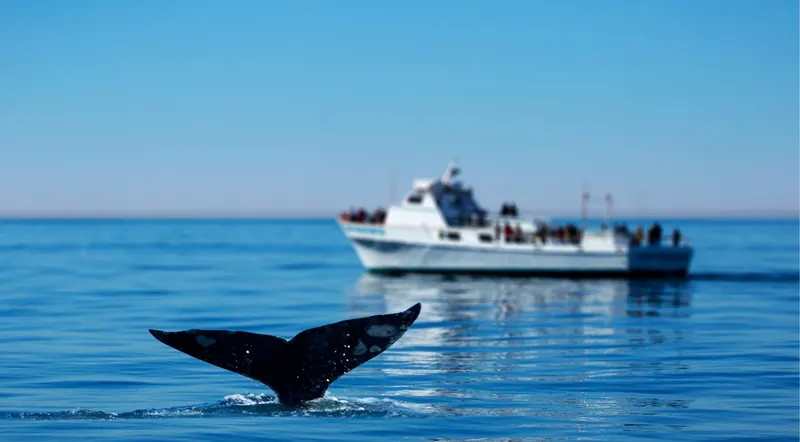
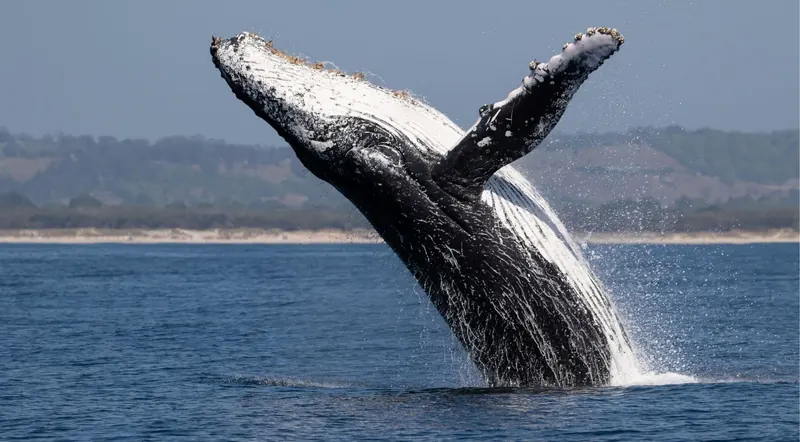
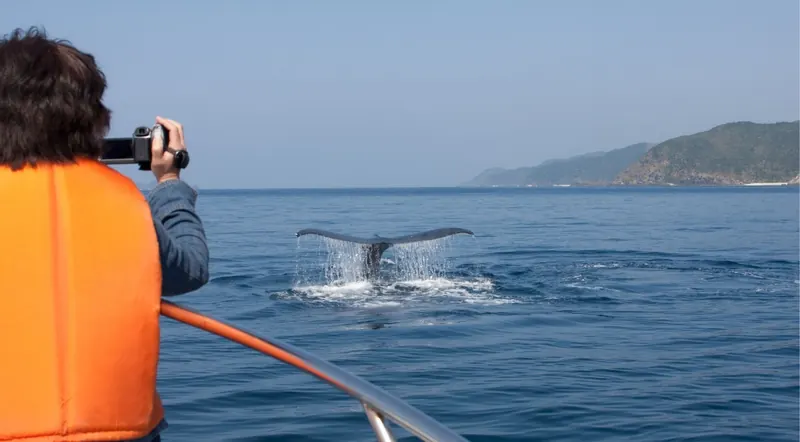
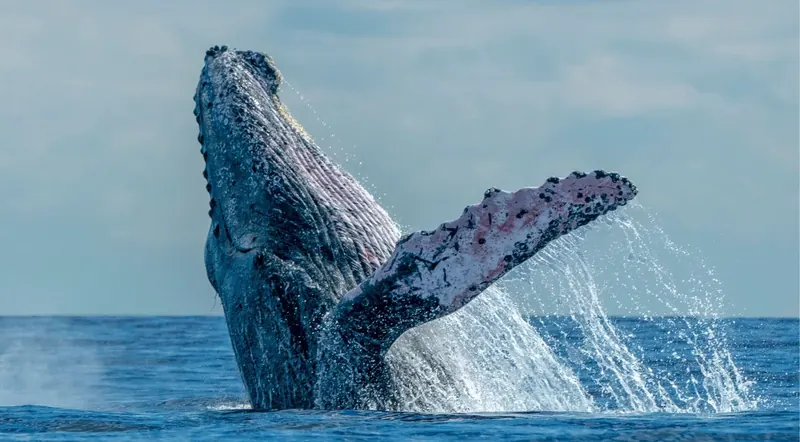
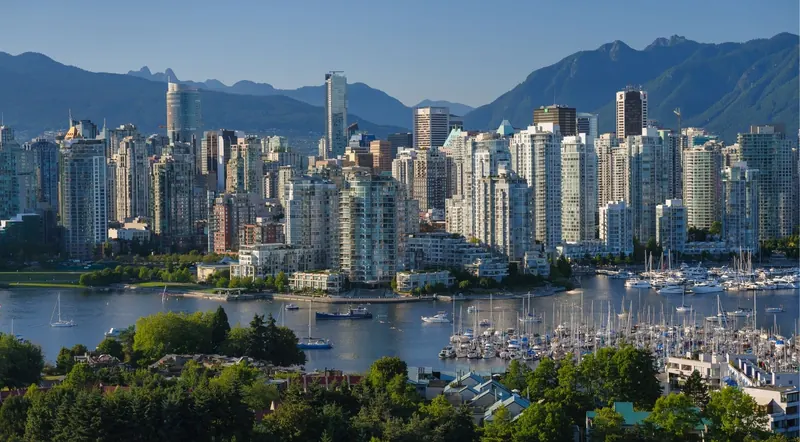
Naturalist guide, free photos, flotation suits and a sighting guarantee are standard; food, gratuities and warm layers are on you.
Sighting reliability, what you actually see, the naturalist, and range — the trade-offs in plain terms.
Crews share live locations across a network and travel to active feeding areas. Shore sightings from spots like Point Atkinson are possible but rare, distant and unpredictable.
From the water you watch orcas hunt and humpbacks dive within the legal viewing distance. From shore, even a lucky sighting is a far-off fin or blow through binoculars.
Onboard biologists identify individual whales, explain behaviour and run hydrophones. No shore lookout comes with commentary or a sighting guarantee.
A 3–5 hour trip covers far more water than you ever could from land, and the scenic crossing past seals, sea lions and eagles is part of the payoff.
Travel time, day-trip ease, boat transit to the whales, season length and who each suits — the short answer per row.
| Criterion | Vancouver | Victoria |
|---|---|---|
| Getting there from downtown Vancouver | Walk or 10-min Aquabus to Granville Island | ~1.5-hr ferry or a floatplane first |
| Day-trip feasibility | Easy half-day, back for dinner | Realistically a full day or overnight |
| Boat transit to the whales | ~60–90 minutes to the grounds | Often shorter — closer to the whales |
| Season length | Roughly April–October | Longer; some operators run year-round |
| Best for | City-based visitors; ocean-and-mountains backdrop | A dedicated whale day; more operators |
Short version: the whales are the same Salish Sea population, so if you're based in Vancouver, stay in Vancouver. Cross to Victoria only if you're already going for other reasons.
Recurring themes across 3,000+ verified reviews of the featured Prince of Whales catamaran trip.
Reviewers describe the engines dropping and the whole deck falling quiet as orcas surface alongside — the high point of the trip and what most remember.
Theme · The sightingThe onboard guides draw repeated praise for identifying individual whales, explaining behaviour and turning the crossing into a running natural-history lesson.
Theme · The guideFamilies and seniors single out the covered catamaran's heated cabin, washrooms and stable ride as the reason the day worked for everyone aboard.
Theme · The catamaranTravellers note how straightforward the sighting guarantee was on the rare quiet day — a free return trip rather than a lost fare.
Theme · The guaranteeThemes summarise patterns across 3,000+ verified GetYourGuide reviews of the featured Prince of Whales catamaran tour (4.8/5), as of September 2026. We add verbatim traveller quotes as they're published.
April–October season, Granville Island vs Steveston, what to wear on the water and Zodiac age limits — what to plan before you book.
Tours run roughly April to October, peak May to September. August is often the strongest month for combined orca and humpback activity and the calmest weather. Bigg's orcas appear year-round; humpbacks peak May–October. Visiting from November to March? See our winter whale watching guide, which explains why Victoria is the base in midwinter.
Granville Island, in the city, is easiest for downtown visitors — walkable or a short Aquabus ride. Steveston in Richmond is 25–40 minutes south by car but sits closer to the whales, meaning more time on scene.
Dress far warmer than for the city — it's cold and windy on the water even in July. Bring windproof, waterproof layers, a tight-fitting hat, sunglasses and sunscreen. A 300mm+ zoom beats a phone for photos.
Covered catamarans have washrooms, heated cabins and easier access, and minimise motion; the Salish Sea is calmer than open ocean, especially on summer mornings. Take motion-sickness medication about an hour before if you're prone, and see whether a morning or afternoon departure suits you better.
Covered boats generally welcome children 2 and up and suit seniors and nervous travellers. Zodiacs usually require age 5+ and a minimum height, and aren't recommended for pregnant guests or anyone with back or neck problems.
Most likely Bigg's orcas, humpbacks, sea lions, seals, porpoises and bald eagles. Gray whales pass in spring; minke whales appear occasionally. Crews don't watch the endangered Southern Resident orcas.
Yes. Boats from Granville Island and Steveston reach the Salish Sea, where Bigg's (transient) orcas were reported on 342 of 365 days in 2025 and humpbacks on 314 days, per the Pacific Whale Watch Association. You'll most likely see Bigg's orcas, humpbacks, porpoises, seals, sea lions and bald eagles — not the endangered Southern Resident orcas, which ethical operators have not watched since 2019.
For most first-time visitors, yes — especially May to September. Operators report 90–98% sighting rates in peak season and nearly all offer a free-return guarantee if no whales are seen. It isn't cheap (about CA$155–$200 per adult) and wildlife is never guaranteed on a given day, but it's the most convenient way to see wild orcas or humpbacks without leaving the city.
The season runs roughly April to October, with May to September the peak. August is often singled out for the strongest combined orca and humpback activity and the best weather. Bigg's orcas appear year-round, humpbacks May–October, and gray whales pass through March–May. Time of day matters less than season — though morning tours tend to have calmer seas.
No wildlife sighting is ever truly guaranteed, but nearly every Vancouver operator offers a free-return trip if the boat finds no whales — often with no expiry. Read the fine print: the guarantee covers the boat not finding whales, not a passenger missing them. Book early in your trip so you have time to use the guarantee if needed.
Choose a covered catamaran for comfort: heated cabins, washrooms, multiple viewing decks and a stable ride — best for families, seniors, children and anyone prone to seasickness. Choose an open Zodiac for a faster, closer-to-the-water, more adventurous ride. Zodiacs are colder, bumpier and wetter, usually carry age and height minimums, and are not recommended for pregnant guests or those with back or neck problems. See our full Vancouver boat tours guide for how these compare to harbour cruises, seaplanes and kayaking.
Most half-day tours cost roughly CA$155–$200 per adult and last 3 to 5 hours, plus 30–45 minutes for check-in. Price varies by boat type, departure point and duration; child discounts are common. Naturalist commentary and (on many boats) a free photo package are included — food usually is not.
Granville Island is the easiest departure for downtown visitors — a short walk, transit or 10-minute Aquabus ride, close to the public market. Steveston in Richmond is about 25–40 minutes south by car but sits closer to the whale grounds, meaning more time with whales. Choose Granville Island for convenience; Steveston for a shorter boat transit. See our full Steveston Village and whale watching guide for the detailed day plan.
Both watch the same whales in the same Salish Sea and both offer guarantees. Victoria is marginally closer to the whales with more operators and a longer season, so it has a slight edge as a dedicated hub. But Vancouver wins on convenience if you're already in the city — no ferry needed — plus a skyline-and-mountains backdrop. For the wider destination trade-off, see our BC and Pacific Northwest whale watching guide. If you're already exploring Vancouver Island, see our complete Vancouver Island whale watching guide covering Victoria, Tofino and Telegraph Cove.
Responsible operators follow Canadian rules requiring boats to stay 400 m from killer whales in southern BC coastal waters, 200 m from other orcas, and 100 m from other whales and dolphins. Pacific Whale Watch Association members do not watch the endangered Southern Residents and logged 1,429 protective sentinel actions in 2025. Naturalist guides double as on-the-water research observers.
Dress much warmer than for the city — it's cold and windy on the water even in summer. Bring layered, windproof or waterproof clothing, a tight-fitting hat, sunglasses and sunscreen. For photos, a 300mm+ telephoto beats a phone, since boats stay 100 m or more from whales. If you're prone to seasickness, take medication about an hour before; covered catamarans minimise motion and the Salish Sea is calmer than open ocean.
Four ways onto the Salish Sea — pick comfort, speed, open-air views or a small-group eco-trip.
Comfort · covered
The comfort option: heated cabin, washrooms and multiple viewing decks on a stable ride. Best for families, seniors and anyone prone to seasickness, on a 5-hour trip into the Strait of Georgia.
Featured: Catamaran Whale Watching Tour · ★ 4.7 · From $167 Check availability
Adventure · open boat
Fast, close-to-the-water and exhilarating, with flotation suits provided. Smaller groups and unobstructed views — best for thrill-seekers and photographers. Age and height minimums apply.
Featured: Large Zodiac Tour with Guide · ★ 4.7 · From $155 Check availability
Open-air · scenic
Open-deck views without a full Zodiac soaking — a middle ground between catamaran comfort and Zodiac immersion, departing right from Granville Island into English Bay and beyond.
Featured: Open-air Whale Watching Tour · ★ 4.8 · From $167 Check availability
Small group · eco
A shorter, small-group eco-adventure focused on wildlife and conservation storytelling, departing from White Rock south of the city — good if you want a more intimate, naturalist-led trip.
Featured: BC Whale Watching Eco-Adventure · ★ 4.4 · From $216 Check availabilityFree, regularly updated guides to whale watching season and the best things to do in and around the city.
Month-by-month: when to go, which whales you'll see, departure points and how to choose between a Zodiac and a covered catamaran.
Winter guideNovember to March: why Victoria is the midwinter base, which boats run, what you may see, and how to get there from Vancouver.
Timing guideOperators say sighting odds are equal at 09:00 and 14:00 — what actually changes is the summer sea breeze. The evidence, season by season.
Orca guideThe most reliable boat tours, the best free shore lookouts, and how Vancouver, Victoria and Telegraph Cove compare for killer whales.
City guideThe ultimate 2026 guide — whale watching, Stanley Park, Granville Island, Grouse Mountain, Gastown and the best day trips.
Day tripFerries, floatplanes and a full one-day itinerary — Butchart Gardens, the Inner Harbour and adding a whale watching tour.
ItineraryDay-by-day plans with real timings, restaurant names and 2026 prices, built around a half-day whale watching tour from Steveston.
Boat guideZodiacs, catamarans, harbour cruises, seaplanes and kayaking — every way to get on the water, and which one to pick.
Day trip guideOcean, mountains and islands within a few hours of downtown — Steveston whale watching, Victoria, Squamish, Whistler and Bowen Island.
Island guideVictoria, Tofino and Telegraph Cove compared — where to go, when to go, and how to get there from Vancouver.
Steveston guideA full day-trip plan for Richmond's fishing village — whale watching, the Cannery, waterfront walks and where to eat after your tour.
Destination guideSteveston, Victoria, San Juan Island, Telegraph Cove, Campbell River and Tofino compared for whales, timing and trip style.
Mountain day tripDirect admission, a guided Whistler day trip or a private tour — the three ways to reach the 885 m Squamish summit, compared on price and time.