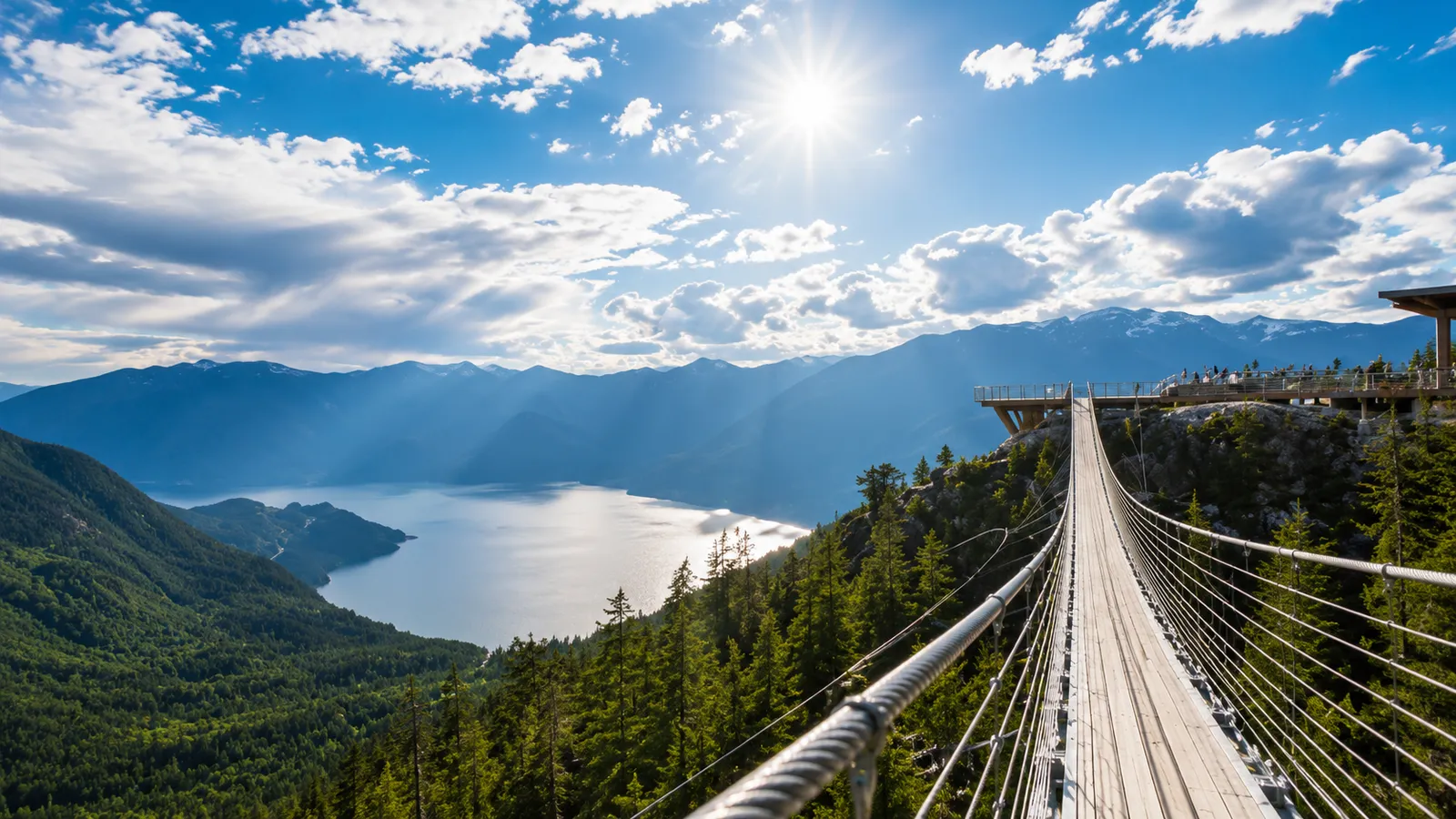
Go in November or December, arrive early in the morning, and start at the Eagle Run dike in Brackendale, a riverside path and viewing shelter off Government Road just north of Squamish. BC Parks names November and December as the peak, with good numbers sometimes lasting into January. Don't go into Brackendale Eagles Provincial Park itself: it is closed in winter, and you watch from the dike on the opposite bank.
For visitors in Vancouver between November and February, it is one of the best wildlife trips while most whale boats are tied up for the winter. Sightings still depend on the salmon, the weather and the day, so even here you won't see hundreds of birds on every visit.
- Best months
- November and December
- Cost
- Free, no ticket
- From Vancouver
- About 70 km, 1 to 1.5 h by car
- Park
- Closed Oct 1 to Mar 31
Brackendale, the Harrison River boat and the Squamish floats side by side
Checked October 28 to November 16, 2026. No booking site sells a Brackendale eagle tour; the calendar above is for the Sea to Sky Gondola admission ticket (4.8 from 600+ reviews), a scenic ride that pairs well with a morning at Eagle Run but includes no eagle viewing. More planning: bald eagle tours near Vancouver, Harrison River eagle watching and winter wildlife tours from Vancouver.
When Is the Best Time to See Eagles in Brackendale?
The eagles come for the salmon. As the fish return to the Squamish River system in late autumn, birds gather to feed and roost in the trees along the banks, and the gathering peaks in the first half of winter.
| Month | Eagle-watching outlook | Planning note |
|---|---|---|
| October | The season is building | Salmon runs and eagle arrivals vary; not usually the strongest month. |
| November | Excellent month to aim for | The salmon draw returning birds; mornings are especially good. |
| December | Peak season | A strong chance of seeing large numbers of wintering eagles. |
| January | Good, but variable | Good numbers can stay, particularly early in the month. |
| February | Less predictable | Some eagles stay; don't count on peak-season numbers. |
| March to September | Not the winter gathering | You may see an eagle, but not the seasonal spectacle. |
The pattern comes from BC Parks and Tourism Squamish, and neither promises a sighting. The counts show why. The valley-wide record is 3,769 eagles in January 1994, and BC Parks puts the average since then at about 1,300. Those are single-day counts across the whole Squamish Valley. In 2024–25, the volunteers of EagleWatch, who count in a fixed area at the Eagle Run dike, recorded a highest count of 78 birds, on November 20, while the valley-wide count that January reached 1,288, according to the Squamish Environment Society. From the dike, expect tens of eagles on a good morning rather than thousands.
For 2026–27, EagleWatch volunteers are counting at the Eagle Run from November 7, 2026 to January 2, 2027. They often answer questions, but it is a count, not a guided tour.
What time of day is best?
Early morning is usually the best time to start, when eagles are out along the river looking for salmon. Tourism Squamish also suggests mid-afternoon, about 2:30 to 3:30 p.m., when the birds head back toward their roosts. Winter days are short and the weather can turn, so don't leave it until late afternoon.
A good self-guided visit is a morning stop of 45 to 90 minutes at Eagle Run, with time to stay longer if the birds are busy. Bring binoculars: many eagles sit in trees across the wide river and look much smaller than you expect.
More to Do on the Sea-to-Sky Highway
A morning with the eagles at Brackendale leaves the rest of the day free for Squamish and the Sea-to-Sky Highway: ride the Sea to Sky Gondola above Howe Sound, stop at Shannon Falls, or let someone else drive on a Whistler, Sea to Sky Gondola and Shannon Falls day trip from Vancouver.
Where to Watch Bald Eagles in Brackendale
1. Eagle Run Dike: the essential first stop
Best for: first-time visitors, families, photographers and anyone who wants an easy public viewpoint.
Where: the municipal dike along Government Road, across from the Easter Seals Camp at 41015 Government Road, Brackendale. From Highway 99, turn onto Garibaldi Way and carry on north along Government Road. The viewing shelter has interpretive signs about the eagles and the salmon.
Eagle Run looks across the Squamish River to the protected eagle habitat. Scan the tops of the conifers, the bare branches, the gravel bars and the birds flying along the river. The shelter and the fairly level path make it easier than the remote spots along the river.
Tourism Squamish describes the path as suitable for strollers and wheelchairs in good conditions, but snow or ice can change that. Nature Squamish notes that the dike is not routinely ploughed or shovelled after snow, so check the surface before relying on step-free access.
Cost: free. No ticket is needed for the dike.
2. Tenderfoot Creek Hatchery: a second stop
Best for: visitors with a car who want another place to look for salmon and eagles.
Tourism Squamish lists the Tenderfoot Creek Hatchery as a second place to see eagles. The creek's salmon attract birds here too. Public hours and facilities can change, so read the current Tourism Squamish eagle-season guide and any hatchery notices before you go.
Treat it as an extra stop, not a replacement for Eagle Run. Follow the hatchery's signs, closures and barriers, and keep out of working or sensitive areas.
3. Other Squamish Valley viewpoints
There are other riverside viewpoints along the Squamish and Cheakamus rivers. Experienced birders can do well there, but parking, road access and private land boundaries are not always clear. On a short day trip, the official Eagle Run viewing area is the most reliable place to start. Ask at the Squamish Adventure Centre for current advice, and don't treat an unofficial roadside pullout as a visitor attraction.
Can you enter Brackendale Eagles Provincial Park?
Not in winter. The eagles' protected habitat is mostly on the west side of the Squamish River, and BC Parks closes the park from October 1 to March 31; Tourism Squamish gives the same October to March closure. There is no public road or river crossing into the park. Watch from places outside the park, above all the Eagle Run dike on the opposite bank.
Never cross the river, walk onto the gravel bars where eagles feed, or fly a drone to get closer.
How to Get to Brackendale From Vancouver
Brackendale is on the northern edge of Squamish, on the Sea-to-Sky Highway (Highway 99). It is about 70 km from central Vancouver, depending on where you start. In good conditions, allow about 1 to 1.5 hours each way, plus extra for winter weather, traffic and stops. Treat those as planning figures, not live travel times.
Option A: Drive yourself
Driving is the most flexible way to go, because Eagle Run is a particular spot on the river that most sightseeing tours skip.
- Head north from Vancouver on Highway 99 toward Squamish.
- Leave the highway at Garibaldi Way near Brackendale.
- Carry on north along Government Road to the Eagle Run viewing area across from 41015 Government Road.
- Park legally and give yourself time to watch without rushing.
Check DriveBC for weather, road alerts and conditions before you set off. Winter tires or chains may be required on designated BC routes during the winter tire and chain season, so check the current provincial rules for your vehicle and route.
Option B: Bus to Squamish, then a local connection
A car-free visit can work, but don't expect a coach from Vancouver to stop at Eagle Run. Intercity buses serve Squamish, not this stretch of river. You may need a Vancouver to Squamish bus plus a local bus or a taxi, with the return trip arranged in advance. Routes, frequencies and winter schedules change.
Check the current operator timetable and BC Transit Squamish before you commit. If you only want an hour at Eagle Run, the travel time may outweigh the visit; for a full nature day in Squamish it makes more sense. Our car-free winter guide covers trips that are easier without a car.
Option C: A guided Sea-to-Sky sightseeing tour
If you'd rather not drive, look for a tour that explicitly includes Brackendale's Eagle Run or winter eagle viewing. Many Vancouver, Squamish and Whistler tours use the same highway without stopping where the eagles are. The Whistler, Sea to Sky Gondola and Shannon Falls day trip (4.8 from 1,400+ reviews on GetYourGuide) is a good winter day out, with stops at Shannon Falls, the gondola and Whistler Village, but eagle viewing is not on its itinerary. Book it as a Sea-to-Sky sightseeing trip and count any eagles from the coach window as a bonus.
Are There Guided Eagle-Watching Tours in Brackendale?
Don't count on a guided Brackendale tour for every winter date. Tourism Squamish describes eagle viewing as self-guided and suggests asking the Squamish Adventure Centre for advice. That makes Eagle Run easy for independent visitors.
On the river itself, tour operators such as Squamish Rafting list a winter eagle float: Squamish Rafting's wilderness and eagle-viewing float is listed from October to April, with November to February as the prime months. A listing is not a departure, so confirm that the float runs on your date before you plan the day around it. Our guide to bald eagle watching near Vancouver has the questions to ask the operator.
If a guided boat trip matters most, look at the Harrison River eagle boat in the Fraser Valley when its seasonal departures are running. It is a different river and a different day out, not a Brackendale trip.
| Experience | Best for | Booking |
|---|---|---|
| Eagle Run, self-guided | Most first-time visitors | Free public viewpoint; nothing to book. |
| Squamish eagle-viewing float | Seeing the valley from the water | Sold by the operator; check that your date runs. |
| Sea-to-Sky scenic day trip | Visitors without a car | Check the stops; an eagle stop is not standard. |
| Private nature guide or driver | Photography and flexible timing | Get availability, access, length and the eagle focus confirmed in writing. |
| Harrison River eagle boat | A guided eagle trip by boat | A different destination; check seasonal dates. |
Brackendale vs Harrison River Eagle Watching
Both are good places for winter bald eagles, but they suit different days out.
| Question | Brackendale and Squamish | Harrison River and Harrison Mills |
|---|---|---|
| Best experience | Watching on your own from a public riverside dike | Riverside viewpoints plus a seasonal eagle boat |
| Direction from Vancouver | North on Highway 99 | East into the Fraser Valley |
| Strongest months | November and December, sometimes January | Autumn into early winter, with November the peak |
| Does a ticket help? | Not needed for Eagle Run | Useful if you want the boat |
| Best reason to choose it | A scenic Sea-to-Sky day and free viewing | A dedicated wildlife boat trip |
For all the eagle trips side by side, with booking advice, read Best Bald Eagle Watching Tours Near Vancouver.
A One-Day Eagle-Watching Itinerary From Vancouver
- Morning: leave Vancouver early and drive north on Highway 99. Reach Eagle Run while the light is good and take your time scanning the trees and riverbanks. Use binoculars before you decide the eagles aren't there; many sit very still.
- Late morning: if it is open to visitors, make a second stop at the Tenderfoot Creek Hatchery, or take a short walk around Squamish.
- Lunch: eat in Squamish, have a hot drink and dry off if it has been raining.
- Afternoon: if the weather and opening hours suit, add a Sea-to-Sky sight such as a viewpoint or the Sea to Sky Gondola; our gondola tickets guide covers the ride. Keep the plan loose: the eagles may be more interesting than the schedule.
- Return: drive back to Vancouver before conditions get difficult. Winter darkness comes early, so check the forecast and the roads before you set off.
With children, keep it simple: Eagle Run, lunch in Squamish and one more stop. For bird photography, skip the extra sight and concentrate on the morning and mid-afternoon viewing windows.
What Wildlife Might You See Besides Bald Eagles?
The Squamish River supports more than one headline species. Depending on the spot, the season and your luck, you may see waterbirds and other birds of prey, and the salmon are the reason the eagles are there at all. The mountains and the wide river make the setting half the appeal.
Don't expect marine mammals at Eagle Run. If seals, sea lions or whales are the goal, pick a trip on the sea: see winter wildlife tours from Vancouver, where to see sea lions near Vancouver in winter or winter whale watching near Vancouver.
How to Photograph Bald Eagles Responsibly
- Bring binoculars first. A pair with 8x or 10x magnification helps you find birds across the river; Nature Squamish recommends those powers for its EagleWatch volunteers.
- Use a telephoto lens, not your feet. Distant birds are normal at a protected site. A 200–400 mm or longer lens helps, but good behaviour matters more than equipment.
- Watch the trees as well as the sky. Eagles often sit for a long time, and a perched bird against mountains or winter forest can be the best picture of the day.
- Dress for standing still. An hour on a cold, damp riverbank feels very different from a walk around Squamish.
- Keep dogs on a leash and stay on the dike. Don't approach feeding birds, walk onto the gravel bars or fly a drone near wildlife.
- Be patient. A quiet hour doesn't mean the eagles have gone for the winter.
Tourism Squamish's responsible-viewing advice warns that scaring eagles off their food costs them energy they need to get through the winter.
What to Bring for a Winter Visit
Pack waterproof footwear with good grip, a warm outer layer, gloves, a hat, binoculars, a camera if you want one and a thermos or water bottle. An umbrella can help, but in the wind a hood is often more use. Bring snacks if you have children with you, and leave room in the day for the weather.
Eagle watching works in rain and cold, but avoid dangerous driving conditions, icy paths and any riverside spot that is flooded or closed. If you need fully accessible facilities, check conditions locally first: a path that is smooth in summer may be snowy or slippery in winter.
Is Brackendale Worth Visiting If You Aren't Seeing Whales?
Yes, especially in November and December, if you enjoy wildlife and keep your expectations realistic. Whale watching from Vancouver is seasonal, and winter sightings at sea are never guaranteed. Brackendale is a wildlife trip on land that gets better in winter, and it fits easily into a day on the Sea-to-Sky Highway.
If seeing an orca is the one thing you want, Brackendale is not a substitute. Look at Victoria whale watching in winter, where SpringTide's winter Zodiac runs, or our comparison of Vancouver and Victoria in winter.
Plan Your Winter Wildlife Day Trip
Brackendale suits visitors who reach Vancouver in the whale-watching off-season: the eagle gathering is a winter event, the main viewpoint is free, and the Sea-to-Sky scenery makes the drive worth it even on a quiet day for birds.
For the best chance of a good visit, go in November or December, reach Eagle Run early, bring binoculars and leave the eagles undisturbed. If you'd rather book a guided trip, check what the operator includes, because most scenic tours don't stop for eagles.
Related Guides
- Best bald eagle watching tours near Vancouver
- Harrison River eagle watching: tours and season
- The best winter wildlife tours from Vancouver
- Winter whale watching from Vancouver: where to go
- Vancouver whale watching in December
Sources and Methodology
Checked October 28 to November 16, 2026. Confirm access, path conditions, hatchery hours, bus times and any tour departure again before you travel.
- BC Parks, Brackendale Eagles Park: the peak months, the winter closure, the Eagle Run location and the valley counts.
- Tourism Squamish, Brackendale Eagles Provincial Park: the October to March closure and the path.
- Tourism Squamish, Eagle Viewing: self-guided viewing and the best times of day.
- Tourism Squamish, Tips to Make the Most of Eagle Season (December 2, 2025): Tenderfoot Creek Hatchery and responsible viewing.
- Nature Squamish, EagleWatch: binoculars and the unploughed dike.
- Squamish Environment Society, EagleWatch 2024–2025 Season Results: the 78-bird peak and the 1,288 valley count.
- Squamish Environment Society, EagleWatch 2026–27: this season's count dates.
- Squamish Rafting, wilderness and eagle-viewing floats: the listed season.
- DriveBC and BC Transit Squamish: roads and local buses.