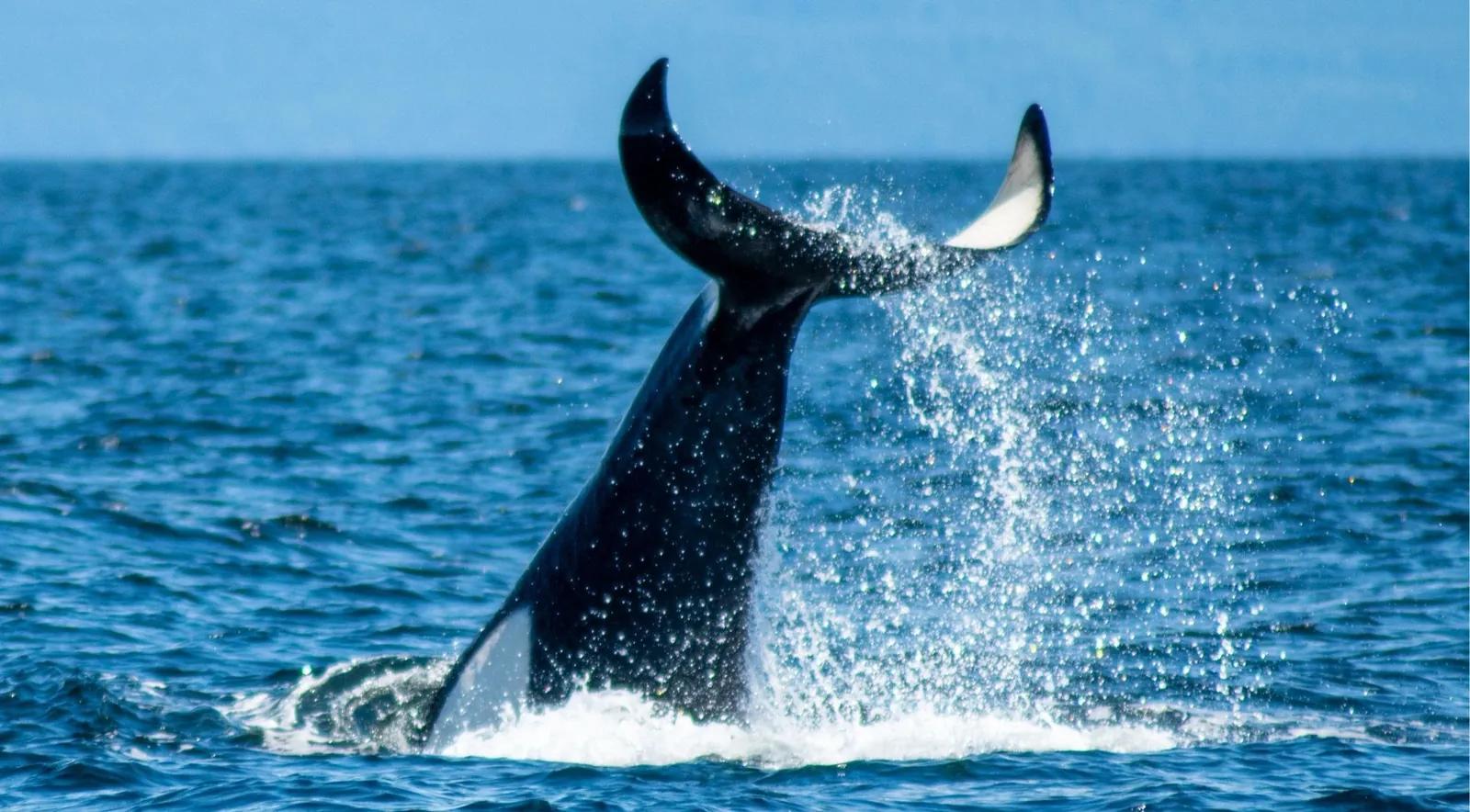
For winter 2026–27, compare the Seabreeze winter eco tour from Steveston with Victoria's whale watching operators, such as Eagle Wing's heated catamaran or SpringTide's winter Zodiac. Keep your plans flexible for weather and travel time.
Keep two things apart: orcas being in the area, and a tour being available. A sighting report does not mean a boat leaves Vancouver that day, and a winter wildlife cruise is not a promise of orcas. Without a boat, coastal viewpoints give you a chance of a passing pod, but not one you can plan on.
- Winter orca
- Mostly Bigg's
- Whale-focused tours
- From Victoria
- Near Vancouver
- Steveston eco tour
- Sightings
- Never guaranteed
Free cancellation · check live dates before arranging transport
Last checked October 28 to November 4, 2026. This page is about orcas; for every winter tour from the city, including the ones that are not whale-focused, see our winter whale watching from Vancouver guide.
Are There Orcas Near Vancouver in Winter?
Yes. Orcas use the whole Salish Sea, the connected waters around southern Vancouver Island, the Gulf Islands, the San Juan Islands and the Strait of Georgia. Vancouver is one gateway to it, but the whales are not swimming off downtown Vancouver all the time.
You will hear about two kinds of orca:
- Bigg's (transient) killer whales: marine-mammal hunters that range widely after seals, sea lions and porpoises. They can be seen in the Salish Sea all year.
- Southern Resident killer whales: fish-eaters, tied above all to Chinook salmon, whose movements through the region vary a lot. They are endangered and protected by especially strict rules for boats.
Not every sighting is the same population, and you can't always tell which one from a distant fin. A good guide will tell you when they are unsure, not label every pod with confidence.
The Orca Behavior Institute's 2025 Bigg's summary counted 1,860 unique Bigg's group sightings in the Salish Sea that year. Sightings were most frequent in May, June and August and least frequent in November, December and January, and even those three months added up to 252 group sightings. Winter orcas are real, then, just reported less often than in the busy months. Each sighting counts one group on one day across the whole region, so the total says nothing about your odds on a particular tour.
More to Do Between Winter Boat Trips
On a day the boats stay in, look for wildlife and views ashore: the harbor and canneries of Steveston Village, the Inner Harbour in Victoria, the snow on Grouse Mountain, the rainforest at Capilano Suspension Bridge Park, the seawall around Stanley Park, and the Sea to Sky Highway north to Squamish.
When Is the Best Winter Month to See Orcas?
No winter month can be relied on for a single boat trip. Orcas follow their prey and other conditions in the sea, and winter daylight, wind and operator schedules limit when visitors can get out on the water.
| Month | What to expect | What to book |
|---|---|---|
| November | Bigg's orcas possible; tour schedules switch from summer to winter | The Steveston winter eco tour, or a Victoria operator where one sails |
| December | The shortest days and changeable seas; whales still possible | A heated or semi-covered whale-focused tour from Victoria |
| January | Winter sightings continue, but rough days and cancellations happen | A flexible Victoria trip or the Steveston eco tour |
| February | Orcas still possible, with longer days than midwinter | A Victoria winter whale tour or the Steveston wildlife cruise |
This table is not a sightings forecast. A tour can find whales in a month with few reported sightings, or find none when regional reports are high.
For planning a particular month, read our guides to whale watching in November, December, January and February.
Where to Go Orca Watching From Vancouver in Winter
1. Steveston, Richmond: the nearest winter wildlife boat
Historic Steveston Village, at the mouth of the Fraser River, is the practical start for visitors who want a boat trip without going over to Vancouver Island. Seabreeze Adventures runs a winter eco tour season from November 7, 2026 to March 28, 2027, leaving at 11 a.m. for about four hours.
Its large semi-enclosed boat has a heated, sheltered area, outside viewing decks and a washroom. The winter route looks for a wide mix of marine wildlife: sea lions, seals, seabirds and eagles, and whales if the boat finds them. Fares when we checked were CA$149 per adult, $129 for seniors and students, $99 for children 4 to 12 and free for children 3 and under; check the current dates, taxes and fares with the operator.
Best for: visitors staying in Metro Vancouver who would enjoy a winter nature cruise even if no orcas appear.
Not ideal for: anyone who will count the day a failure without killer whales. Seabreeze sells it as an eco tour, not an orca trip.
Booking: Seabreeze winter tours, booked direct; neither GetYourGuide nor Viator lists the winter tour. Our Steveston whale watching guide covers getting there.
2. Victoria: the better choice for a whale-focused winter tour
If you specifically want to go whale watching in winter, look hard at Victoria. Eagle Wing Tours runs shoulder-season whale watching from December to April on a heated, semi-covered catamaran, and sells the trip around whales and marine wildlife, unlike a general winter eco cruise. Its Viator listings are summer trips, so book the winter tour direct.
Other Victoria operators run winter Zodiacs: SpringTide's Winter Zodiac Adventure (4.8 from 341 reviews) runs from November 1, 2026 to March 31, 2027, and Prince of Whales' Victoria Zodiac (4.5 from 139 reviews) is sold as year-round. Check the exact departure date, minimum age, clothing rules and boat type, because not every boat sails every winter day.
Best for: travelers who can give the trip to Vancouver Island enough time and want a whale-focused day.
Trade-off: Victoria is on another island. Getting there from Vancouver can mean a ferry, a flight or a night away, and wind and sea can disrupt both the crossing and the whale tour. A Victoria departure is not a boat trip from downtown Vancouver.
3. Orca watching from shore: possible, but down to luck
You don't always need a boat to see orcas. They sometimes pass through channels you can see from accessible coast in southern British Columbia, including southern Vancouver Island and the Gulf Islands. A shoreline visit is good for scenery and birds, but don't treat it as a dependable way to see orcas in winter.
On the Metro Vancouver mainland, you can watch the water from viewpoints near Steveston, the waters around Point Roberts and the waterfront, but sightings are sporadic and the animals may be far offshore. These are places for general marine watching, not orca-viewing sites. For a better land-based chance, plan a separate Vancouver Island or Gulf Islands trip with realistic ferry times; our guide to the best places to see orcas near Vancouver lists the shore spots.
Binoculars and patience help. Never approach, feed or follow whales in a private boat or kayak. You can see past patterns on the Orca Behavior Institute sightings maps, but they are research records, not a live location service or directions for chasing whales.
Steveston vs. Victoria: Which Should You Choose?
| Question | Steveston winter eco tour | Victoria winter whale-focused tour |
|---|---|---|
| Departure | Steveston, Richmond (Metro Vancouver) | Victoria, Vancouver Island |
| Main purpose | General marine wildlife and the coast | Whale watching and marine wildlife |
| Orcas possible? | Yes, no guarantee | Yes, no guarantee |
| Winter comfort on board | Large semi-enclosed boat with sheltered space | Depends on the boat; Eagle Wing has a heated, semi-covered catamaran, SpringTide an open Zodiac |
| Getting there from the mainland | Easier, no crossing | Ferry or flight, plus onward transport |
| Best fit | Flexible wildlife lovers and families | People who put a whale-focused trip first |
Our recommendation: on a short Vancouver break, choose Steveston for an easy winter trip on the sea. If seeing whales is the main reason for your trip, look at Victoria and stay the night, so ferry times and weather don't eat your whole day. Our Vancouver vs Victoria in winter comparison sets out the trade-off in full.
Our winter whale watching from Vancouver guide compares every winter tour from the city, orca-focused or not.
How Likely Are You to See an Orca in Winter?
No honest guide can give you one reliable winter orca percentage for Vancouver or Victoria. It would depend on the operator, the month, the departure time, the weather, where the boat searches and what counts as a sighting. A research total for the Salish Sea is not a tour's success rate.
Some whale watching operators advertise a whale guarantee, but that may mean a discounted return trip if no qualifying whale is seen, not a guaranteed sighting or a cash refund. Read the conditions: return-trip offers can carry expiry dates, species rules, fees or season limits.
If a winter wildlife cruise finds harbor seals, sea lions, cormorants and bald eagles but no orcas, it can still be a good day, as long as that is what you expected when you booked.
What Other Wildlife Might You See?
The coastal waters near Vancouver have plenty to watch besides killer whales:
- Steller and California sea lions: often at haul-outs, along shorelines and in feeding areas; what you see depends on the route. More on where to see sea lions near Vancouver.
- Harbor seals: common all year, often resting along sheltered coast.
- Bald eagles: seen near the shore and along waterways, especially where there is food.
- Cormorants, grebes and other seabirds: good subjects on a winter eco cruise.
- Humpback whales and porpoises: possible in the wider region, but not something to expect on a single winter trip.
If eagles appeal, the Harrison River bald eagle boats sail while the salmon are running; our Harrison River eagle watching guide covers them.
Responsible Orca Watching: The 2026–27 Rules
Killer whales are protected in Canadian and U.S. waters. From June 1, 2026 to May 31, 2027, Transport Canada's interim order requires all vessels to stay at least 1,000 meters from Southern Resident killer whales in the Salish Sea south of Campbell River and in the whales' critical habitat. Fisheries and Oceans Canada sets a 200-meter minimum distance from all other killer whales in British Columbia. Other marine mammals have their own distances, and U.S. rules differ.
These are legal minimums, not targets. A careful captain may stay farther back, and because the populations are hard to tell apart, the guidance is to keep more distance when you are not sure which kind of orca you are looking at.
Read Fisheries and Oceans Canada on watching marine wildlife and Transport Canada's 2026 Southern Resident measures. Rules and interim orders change, so operators and private boaters should check the current requirements before going out.
Never push a guide to get closer for a photo. A longer lens or binoculars is the answer.
What to Wear on a Winter Orca or Wildlife Tour
Even when Vancouver feels mild, a few hours at sea can feel much colder in the wind, spray and damp. Pack:
- A warm base layer and an insulating mid-layer.
- A waterproof, windproof outer jacket.
- Warm pants, plus waterproof overpants if you plan to stand on the outside decks.
- Non-slip closed-toe shoes and warm socks.
- A hat, gloves, binoculars and a camera with a secure strap.
- Water and snacks if the operator allows them, and any motion-sickness remedy you normally use, following its directions.
Semi-covered and heated boats are more comfortable, but no boat takes the chop out of the sea. With young children or anyone prone to seasickness, check the boat's layout and the operator's age limits before you buy.
Can You Visit Victoria for Whale Watching on a Day Trip From Vancouver?
Sometimes, but don't book a ferry crossing and a whale tour with a tight connection. Vancouver to Victoria is not a quick city transfer. Most ferry journeys go from downtown Vancouver to Tsawwassen, cross to Swartz Bay, then carry on into Victoria, and the timings depend on the service and the traffic. A Vancouver to Victoria coach transfer (4.5 from 470+ reviews) takes care of the connections, and the downtown-to-downtown seaplane (4.8 from 114 reviews) is the fastest way across.
For many winter travelers, one night in Victoria gives more room and less stress. If you have only one day in Vancouver, Steveston may be the better plan. Our day trip to Victoria guide has the timings.
Final Verdict: Is Winter Orca Watching Worth It?
Yes, if you go with realistic expectations. Orcas can turn up in the Salish Sea all winter, and there are real cold-season trips to choose from. The easiest one from Vancouver is the winter marine eco tour from Steveston. If a whale-focused boat trip is the priority, look at Victoria and plan for the extra travel.
Book a trip you would enjoy even without an orca. Winter water, seabirds, sea lions, mountain scenery and a good naturalist can still make it a memorable day.
- Check Steveston winter wildlife cruise dates (Seabreeze, booked direct)
- Compare Victoria winter whale tours: SpringTide's Zodiac, 4.8 from 341 reviews
Next reads: winter whale watching from Vancouver · best places to see orcas · whale watching in February
Sources and Methodology
Checked October 28 to November 4, 2026. These sources support the operator, sightings and regulation details on this page; prices, schedules and rules change, so treat them as a snapshot.
- Seabreeze Adventures, Winter Tours: the 2026–27 season, departure time, boat and fares.
- Seabreeze Adventures, Winter on the Water: the winter eco tour's wildlife.
- Eagle Wing Tours, Shoulder Season: December to April tours on a heated, semi-covered catamaran.
- SpringTide, whale watching tours: the November 1, 2026 to March 31, 2027 winter Zodiac.
- Prince of Whales, Victoria: the year-round Zodiac.
- Orca Behavior Institute, 2025 Bigg's annual summary: 1,860 group sightings and the months with the most and fewest sightings.
- Orca Behavior Institute, 2025 Southern Resident and Bigg's comparison.
- Orca Behavior Institute, monthly sightings maps: methodology and past patterns.
- Transport Canada, Ship Safety Bulletin 08/2026: the 1,000-meter Southern Resident distance, June 1, 2026 to May 31, 2027.
- Fisheries and Oceans Canada, Watching marine wildlife: the 200-meter distance for other killer whales.