The short version
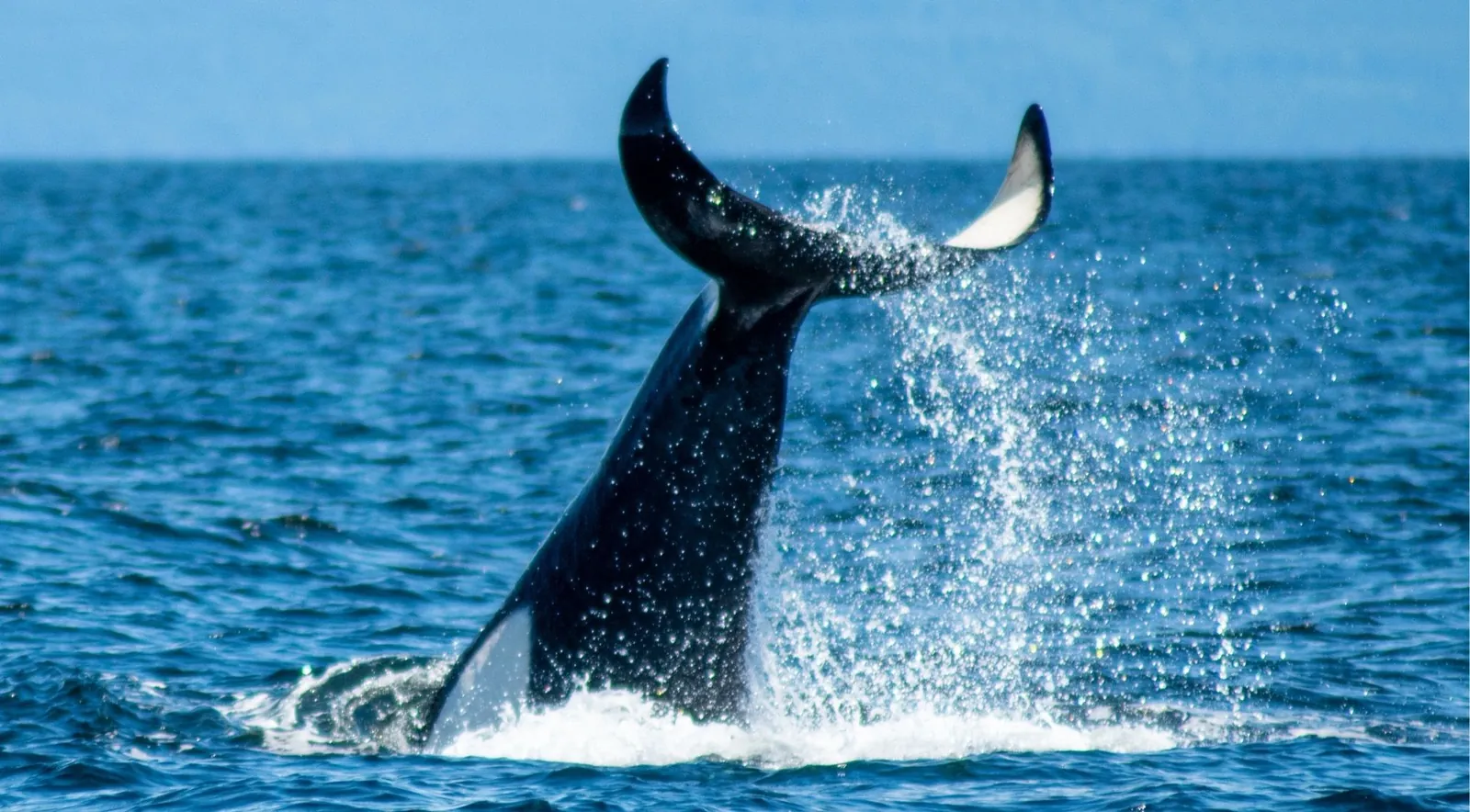
- Sightings: a wash. Prince of Whales says guests are "just as likely" to see whales morning, afternoon or evening; Vancouver Whale Watch says the same.
- What actually changes: wind. Summer afternoons on the Strait of Georgia pick up a sea breeze that can hit 8–14 knots by mid-afternoon — mornings are usually calmer.
- Our take: book 09:00–10:30 in summer for the smoothest ride, or a 16:30/sunset departure if you're chasing photos.
- Spring and autumn: most operators run one midday trip — the AM/PM question barely applies.
- Winter: skip the debate. Vancouver's regular season is mostly over; Victoria runs year-round if you need a winter tour, and our winter whale watching guide explains the options.
The Short Answer
Book a summer morning if you want the smoothest possible ride. Book a sunset trip if photos matter more to you than comfort. Any other time of year, stop weighing morning against afternoon and start weighing the actual weather forecast and the boat you'll be on — because the honest answer is that the whales don't check the clock, and neither, it turns out, should you.
That's not a guess — it's what the two operators with the clearest AM/PM choice actually say. Prince of Whales tells guests they're "just as likely" to see whales on a morning, afternoon or evening trip. Vancouver Whale Watch says its own morning and afternoon departures spot whales equally often. Both quote overall success rates in the 95–98% range, though notably neither breaks that number down by departure time — so there's no hidden data suggesting one slot secretly outperforms the other. The one thing that reliably shifts with the clock is the sea state, and that's worth understanding before you pick a time.
Why the Whales Don't Care What Time You Show Up
It helps to know what you're actually hoping to see. Bigg's orcas — the mammal-hunting killer whales most tours now find — are increasingly common nearly year-round, and their movements track prey and season, not sunrise. Humpbacks have rebounded dramatically in the Salish Sea since the late 2000s, but again, month matters far more than hour: peak season (roughly May through October) beats any time-of-day trick. Grey whales pass through on a northbound migration each spring, and where they are on a given week matters more than when your boat leaves the dock.
A 2026 study of killer-whale detections spanning 1978–2022 backs this up at scale: it found strong seasonal clustering — the bulk of sightings fall between May and September — but nothing resembling a repeatable morning-versus-afternoon pattern. If an operator's own AM/PM parity claim ever felt like a sales line, this is the independent confirmation that it probably isn't one.
Other Things to Add to Your Vancouver Itinerary
A half-day on the water still leaves most of the day free. Pair it with Stanley Park by bike, a wander through Granville Island or Gastown, the Capilano Suspension Bridge, the Grouse Mountain Skyride, or a longer trip out to the Sea to Sky Gondola or Victoria.
What Actually Changes: The Afternoon Wind
Here's the part operators don't put on their homepage but their captains will tell you if you ask: on a typical fine summer day, the Strait of Georgia develops a sea breeze that kicks in around mid-morning and strengthens through the afternoon, commonly reaching 8–14 knots by mid-afternoon before easing again as the sun gets low. Because the Strait's chop is largely wind-driven, that turns into a genuine pattern — calm early, choppier through the afternoon, smoother again near sunset — on the kind of settled summer day most people picture when they book a trip.
It's not a guarantee. A strong weather system can flatten that whole cycle in either direction, which is exactly why the day-of marine forecast should always beat a seasonal rule of thumb. But as a starting assumption for booking weeks ahead, a 09:00–10:30 departure is the safer bet for a smooth ride in July and August, especially if you're on an open Zodiac.
Book by Season
| Season | Book this | Why |
|---|---|---|
| Spring (Mar–May) | Late morning/noon | Most schedules only offer one departure around 11:00–12:30 anyway — there's rarely a real choice to make. |
| Summer (Jun–Aug) | 09:00–10:30, or 16:30/sunset for photos | The clearest case: equal sighting odds, but the sea breeze makes morning the calmer ride and evening the prettiest light. |
| Autumn (Sep–Nov) | Late morning/noon | Operators fold back to a single midday trip as daylight shortens; whale activity, especially humpbacks, can still be excellent. |
| Winter (Dec–Feb) | Not a Vancouver AM/PM question | Regular Vancouver tours mostly pause. Victoria's Eagle Wing runs year-round on sheltered boats if you need a winter trip. |
When a Sunset Trip Beats Both
If you're bringing a camera, the calculus changes. A standard 14:00–15:00 summer departure can land you in the choppiest, harshest-light window of the day — a bad combination for tracking a moving subject with a long lens. A genuine 16:30 or sunset departure is a different animal entirely: the light turns low and directional, and the afternoon wind is often already easing. Prince of Whales markets its June–August sunset trip specifically to photographers for exactly this reason.
One caveat worth knowing: you can't control which side of the boat the sun ends up on, since whale locations — not light angles — decide where the captain points the bow. Treat sunset as a strong bet for better conditions and better light, not a guarantee of a perfectly backlit shot.
The Boat Matters More Than the Clock
Before you fixate on a departure time, know that your vessel does more for your day than the hour on the ticket. A 12-passenger open Zodiac puts you low and close to the water for an intimate, thrilling ride — but you'll feel every bit of wind and spray, which is exactly why the morning case is strongest here. A 45-to-95-passenger catamaran with a heated cabin absorbs a breezy afternoon far more gracefully, which is why departure time matters much less once you're aboard one.
The same logic covers crowding and seasickness. There's no published data showing mornings are quieter — both major operators say peak-season trips sell out regardless of time — so if a smaller group matters to you, book the smaller boat, not the earlier slot. And if motion sickness is a concern, the safest combination by a wide margin is a summer morning on a larger, sheltered vessel; the roughest is a small open Zodiac in mid-afternoon chop.
Granville Island or Steveston?
The departure point ends up mattering more to your morning than the clock does. Granville Island sits in the city — easiest for downtown visitors, but parking gets competitive from around 11:00 onward. Steveston is about 40 minutes south by car with a shuttle option, and sits closer to the open water where whales are usually found, meaning less transit time once you're aboard. Either way, plan to arrive roughly 30 minutes before your listed departure for check-in — that's part of your real time commitment, even if it's not on the ticket.
A 09:00 departure also tends to be the safer bet if your evening is booked: trips are advertised at 3–5 hours but can run long when whales are farther out, and a morning trip running late still leaves your evening intact in a way a 14:30 or 16:30 trip might not.
Five Questions Worth Asking Before You Book
| Ask this | Why it beats "is morning better?" |
|---|---|
| "Given tomorrow's forecast, which of your departures do you expect to have smoother water?" | A same-day marine forecast beats any seasonal rule of thumb — this is the single most useful question you can ask. |
| "Which vessel is assigned to my departure?" | A 12-person open Zodiac versus a 95-person heated catamaran changes your day more than the hour does. |
| "Is the afternoon trip a standard 14:00, or genuinely late-day/sunset?" | Those two are not the same trip — one can be the choppiest window of the day, the other the calmest. |
| "What happens if the morning trip is cancelled for weather — can I move to the afternoon?" | Conditions can flip within hours. Knowing your options in advance saves a wasted morning. |
| "How full is this specific departure right now?" | Better than guessing mornings are quieter — nobody publishes that data, so just ask. |
The bottom line: absent a specific weather forecast, choose a summer morning for the smoothest ride, especially on a Zodiac or if you're prone to seasickness. In spring and autumn, take whatever midday slot is on offer and let the forecast and the boat do the deciding. Don't choose morning because you think the whales are more active then — nothing in the evidence supports that. And in winter, the real question isn't AM or PM, it's whether Vancouver is running trips at all.
This guide draws on published statements from Prince of Whales, Vancouver Whale Watch and Wild Whales, Environment and Climate Change Canada marine forecasting guidance, DFO physical oceanography of the Strait of Georgia, and a 2026 peer-reviewed killer-whale detection study. Checked against operator pages live on 18 August 2026.