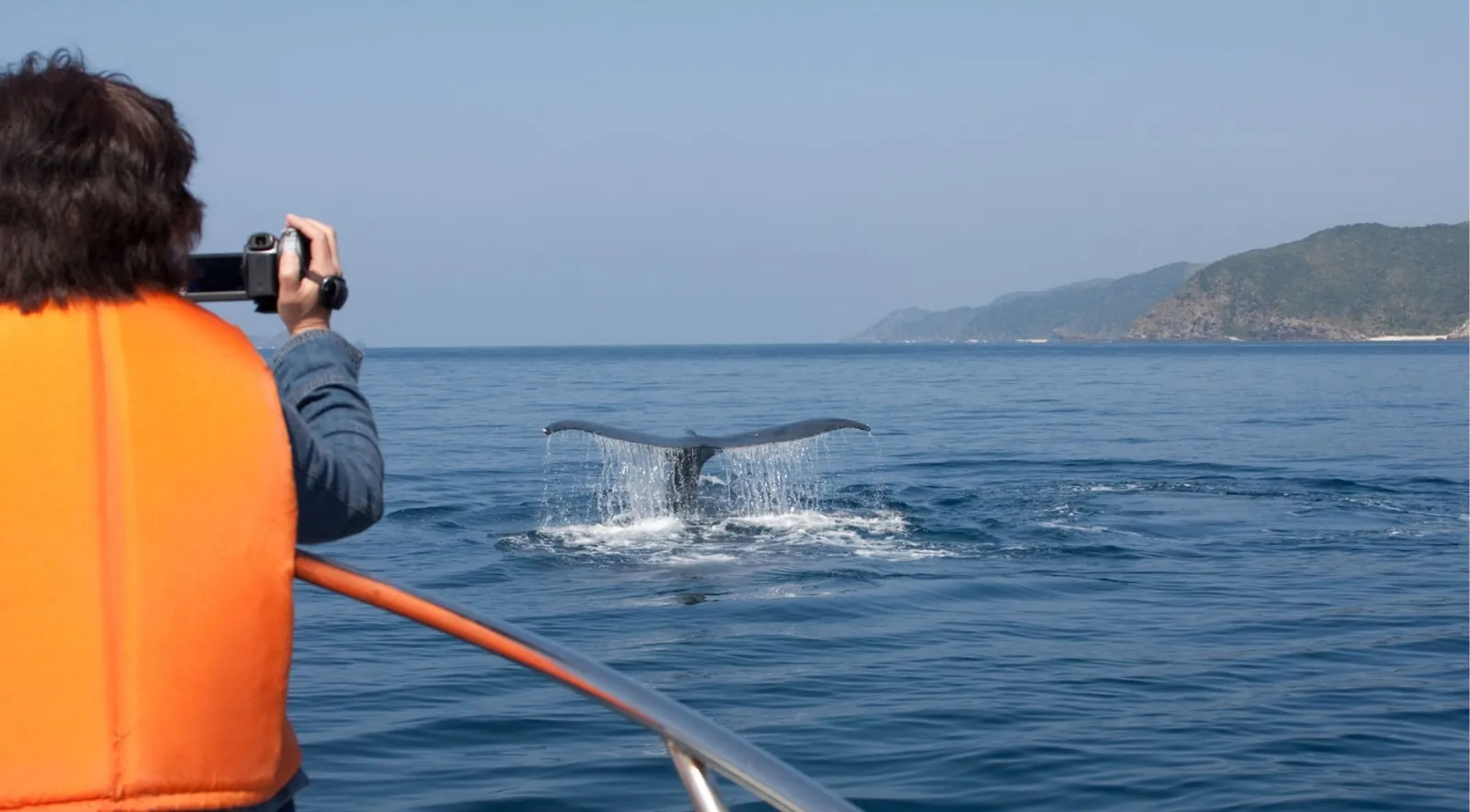
Yes, you can go whale watching in Canada in winter, but bookable tours are concentrated in coastal British Columbia. Victoria is the best mainstream base for December, January and February, with several winter or year-round products and a choice of heated and open boats.
Vancouver's departures are mainly seasonal, so whales being near the city does not mean a public tour runs on every winter date. Most of the big whale-watching regions in Québec, Atlantic Canada and Churchill have no mainstream boat tours in midwinter.
- Midwinter base
- Victoria
- Main winter whale
- Bigg's orcas
- Winter boats
- Heated and open
- Sightings
- Never guaranteed
Free cancellation · check live dates before arranging transport
Canada is famous for summer whale watching: humpbacks feeding off Newfoundland, belugas filling the Churchill River, and many species gathering in the St Lawrence and the Bay of Fundy. Most of those boat seasons finish by late fall, and the list of places where you can book a public whale tour in winter becomes very short.
The orcas have not gone anywhere, though. Bigg's killer whales were reported 252 times in the Salish Sea across November, December and January of 2025, and some of the tours that go looking for them are sold only in winter, such as Orca Spirit's November-to-March Zodiac trip.
Southern Vancouver Island is the exception. Victoria has true winter departures, including heated semi-covered boats and small open ones, while Nanaimo and Sooke add specialist options elsewhere on the island. Bigg's, or transient, orcas are the most realistic whale to hope for, because they use British Columbia's coastal waters year-round. Humpbacks are possible, especially at the edges of winter, but most leave the Salish Sea after the main feeding season.
A winter tour is less about a guaranteed breach and more about searching the sea with a naturalist: sea lions hauled out on the rocks, harbor seals, porpoises, bald eagles, seabirds and, if the search comes together, the tall dorsal fins of traveling orcas moving through dark winter water. For travelers who like wildlife and a quiet coast, that uncertainty is part of the appeal, and good operators do not hide it.
On this page
- What runs from November to March
- Where winter tours run in Canada
- Why go whale watching in winter
- Winter bases in British Columbia
- What whales and wildlife you may see
- Month by month
- Vancouver or Victoria in winter?
- Heated boat or open Zodiac?
- Is winter whale watching worth it?
- Prices, booking and guarantees
- Weather, cancellations and what to wear
- Before you book
- Responsible whale watching
- Trip-planning checklist
- How we know
- FAQ
What Runs From November to March
For this guide, "winter" means the travel-planning window from November through March, even though meteorological winter is December through February. November and March are quite different from the three months in between, so they get their own rows.
| Month | Best practical base | What to know before booking |
|---|---|---|
| November | Victoria; Vancouver on selected dates | A good mix of winter atmosphere and late-fall wildlife. Prince of Whales publishes its Vancouver tour through November, but check the exact end date in its live calendar before planning around a local departure. Victoria has the wider choice. |
| December | Victoria | The clearest winter base. Nanaimo and Sooke can work if you are touring Vancouver Island. |
| January | Victoria | A true winter wildlife search, with Bigg's orcas as the main whale. Choose a heated or semi-covered boat unless you want an exposed small-boat ride. |
| February | Victoria; Nanaimo on selected dates; Tofino later in the month | Victoria is still the easiest base. Daylight starts to improve, but winter weather and thin schedules still matter. Jamie's published 2026 whale season in Tofino began in early February; check west-coast conditions and live dates. |
| March | Victoria; Vancouver on live dates; Tofino | The best month in this window for choice of tours. Vancouver departures return under Prince of Whales' published March-to-November season, Victoria has the most options, and humpback and gray whale interest grows. |
Operator seasons checked September 16, 2026. A published season such as "March to November" does not mean a boat sails on every date in it, so check the live calendar for your day.
The key distinction is between whales being in the water and a tour being available. Orcas can travel through the waters near Vancouver in winter, but that does not mean a major Vancouver operator has a public departure on a January date. Our guide to the best time for whale watching in Vancouver covers the spring-to-fall season in detail.
Where Winter Whale Watching Tours Run in Canada
Winter whale watching in Canada is mainly a southern British Columbia trip, not something you can do across the country. That makes Victoria unusual, and it means you should not assume a famous Canadian whale destination runs boats in January.
| Destination | Usual whale-tour window | Winter verdict | Best known for |
|---|---|---|---|
| Victoria, BC | Some tours year-round, plus dedicated winter tours | Best mainstream winter base in Canada | Bigg's orcas, marine wildlife, several boat types |
| Vancouver, BC | Mainly spring to fall; Prince of Whales publishes March to November | Shoulder months only, on live dates | An easy city departure when it runs |
| Nanaimo, BC | Advertised year-round, with restrictions and live dates | A useful winter option | Small groups on a heated 12-passenger boat |
| Sooke, BC | Dedicated wildlife tour, November to April | A good specialist option | A small-group, lower-cost winter wildlife trip |
| Tofino and Ucluelet, BC | Mostly spring to fall; Jamie's published early February to October for 2026 | Possible from February, on live dates | Open-Pacific scenery and the gray whale migration |
| Tadoussac and the St Lawrence, Québec | Mostly May to October or early November | Not a mainstream winter boat-tour destination | A wide range of species and resident belugas |
| Bay of Fundy, Nova Scotia | Late May to October, strongest June to September | No mainstream winter whale tours | Humpback, fin and minke whales, and big tides |
| Newfoundland and Labrador | May to September | Not a winter whale-tour destination | Humpbacks, puffins and icebergs early in the season |
| Churchill, Manitoba | July and August for beluga trips | Summer only | Thousands of belugas in the Churchill River estuary |
Seasons from Nova Scotia Tourism, Newfoundland and Labrador Tourism, Québec Maritime, Tadoussac tourism, Travel Manitoba's Churchill calendar and Jamie's Whaling Station. See How we know.
Why Canada works so well for whale watching
Canada offers several very different marine ecosystems rather than one famous bay or one star species, which is why travelers plan whole trips around it.
- The species change with the destination. Bigg's and resident killer whales, humpbacks, gray whales and minkes around British Columbia; humpbacks, minkes, fin whales, pilot whales and the occasional North Atlantic right whale around Atlantic Canada; belugas and visiting baleen whales in the St Lawrence; huge summer gatherings of belugas at Churchill; and humpbacks off Newfoundland, often with puffins and, early in the season, icebergs. That gives you a real choice: an orca-focused coastal city break, a summer beluga trip, an Atlantic road trip or a multi-species cruise.
- The setting is as memorable as the animals. Forested islands, fjords, mountain horizons, fishing towns, seabird colonies and working harbors come with the trip. The boat ride is not dead time spent waiting for a whale.
- The big whale destinations sit near real travel hubs. You can add a tour to a Vancouver and Victoria, Québec, Nova Scotia or Newfoundland trip rather than planning a separate expedition. Victoria is especially useful in winter, because the city is still a good short break, with the Inner Harbour, museums, restaurants and hotels close to the docks.
- Naturalists turn a sighting into a story. Good guides explain orca ecotypes, feeding behavior, migration, identification marks, family groups, threats and the conservation rules. That matters when encounters are brief, distant or spread across several species.
- The uncertainty feels real. Whales do not keep a schedule. Watching the crew scan the horizon and follow recent reports makes the eventual sighting more memorable. That is also why honest expectations make for a better trip.
Why Go Whale Watching in Winter?
A winter tour is not summer with colder weather. It appeals for different reasons.
A wilder atmosphere. Low light, dark water, snow-dusted mountains in the distance and fast-changing skies give the Salish Sea a very different feel in winter. The coast feels less like a sightseeing circuit and more like a real wildlife search.
Fewer sightseeing boats. Far fewer operators and departures run in winter than in peak summer, which usually means a quieter harbor and fewer tour boats on the water. Nobody can promise that a particular encounter will be private, though.
Bigg's orcas are possible all year. Bigg's orcas hunt marine mammals and travel widely through the region in every season, which makes them the most believable winter headline. Humpbacks are different: Vancouver Island Whale Watch describes local humpbacks as warmer-month feeders that largely migrate away in winter, and its FAQ says orcas can be found year-round while humpbacks are mainly present from April to October.
Other wildlife fills out the trip. Harbor seals, Steller and California sea lions, porpoises, bald eagles and seabirds can all make the day worthwhile even when no whale appears. What you are booking is a guided winter wildlife search, not an orca show, and travelers who enjoy the whole ecosystem generally get more from it than those chasing one sighting.
An easy fit with a Victoria break. Victoria is a walkable harbor city with several operators, restaurants and indoor attractions, so you can build a two-night winter trip around the tour and still have room to rebook if the weather or a minimum passenger count affects your first departure.
A choice between comfort and adventure. Winter tours are not all exposed inflatables. Heated semi-covered boats give you shelter, washrooms, outdoor viewing decks and somewhere to warm up between sightings, which suits families, first-time visitors and anyone who feels the cold. Open Zodiacs and rigid-hull inflatables, which in Victoria typically carry 12 passengers, make the fast, windy, spray-filled ride part of the adventure.
Other Things to Do on a Winter Trip to Victoria
Round out a winter stay with Butchart Gardens, a walk around the Inner Harbour, the Royal BC Museum, a food tour of downtown Victoria, or a day on Vancouver Island before you head back to Vancouver.
Winter Whale Watching Bases in British Columbia
Which base suits you depends on how you are traveling. Here is the short version, then each place in turn.
- Best overall: a semi-covered tour from Victoria
- Best small-boat adventure: a Zodiac or open boat from Victoria
- Best-value specialist trip: Sooke's winter wildlife tour
- Best small-group heated boat: Nanaimo
- Best if you want to leave from Vancouver: check live dates in November or March
- Best for outer-coast scenery: Tofino, from its published season opening
Victoria: best overall
Victoria has the most winter tours of anywhere in Canada that we could verify. It is also the simplest place to do one. Tours leave from the Inner Harbour or the Fisherman's Wharf area, and you can choose between heated semi-covered boats and exposed 12-passenger craft. These products were listed on the operators' own sites when we checked in September 2026:
| Tour | Published winter availability | From (adult) | Best for | Good to know |
|---|---|---|---|---|
| Prince of Whales Victoria Zodiac | Year-round | CA$199 plus taxes and fees | Active travelers who want a small boat | Open and exposed; physical restrictions apply. On GetYourGuide: 4.5 from 137 reviews. |
| Orca Spirit winter open vessel | Winter | CA$150 | A small-group adventure | Ages 6 and up, with a minimum height; full-body suits supplied. On GetYourGuide: 4.8 from only 22 reviews. |
| Orca Spirit winter semi-covered vessel | Winter | CA$150; the product page also showed a CA$159 adult rate | Families, first-timers and anyone who wants comfort | Check the live total, fees and the dock on your confirmation. Sold on Orca Spirit's own site in winter. |
| Eagle Wing semi-covered boat | December to April | CA$159 | A longer, comfortable trip with a naturalist | Minimum numbers, conditions and the live schedule still apply. Sold on Eagle Wing's own site in winter. |
Operator prices checked September 2026, in Canadian dollars, before taxes and fees. GetYourGuide ratings checked September 16, 2026.
What you can book on GetYourGuide in winter. When we checked GetYourGuide's calendars for November 2026 to March 2027, the Victoria tours with winter dates were all open boats: SpringTide's Zodiac tour (4.9 from 320 reviews) and Prince of Whales' Zodiac had dates on almost every day, and Orca Spirit's winter Zodiac had about a dozen dates a month. The heated and semi-covered Victoria boats, including Prince of Whales' catamaran and Eagle Wing's boats, were off sale there from early November until March. If you want a heated boat in December, January or February, book it directly with Eagle Wing or Orca Spirit.
Who should choose Victoria?
- first-time winter whale watchers
- visitors without a car
- families and mixed-age groups
- travelers who want a heated boat
- Vancouver visitors happy to stay overnight or fly downtown to downtown
- anyone who wants several operators to choose from if a departure changes
Nanaimo: best small-group heated boat
Vancouver Island Whale Watch advertises tours year-round, with restrictions. Its 2025/26 schedule showed a daily noon semi-covered departure from November 1 to December 6, after which visitors were pointed to live availability. Its 12-passenger semi-covered boat has a heated cabin, an outdoor observation area and a toilet. Nanaimo suits travelers already staying there or touring central Vancouver Island; it is much less convenient if your hotel is in downtown Vancouver.
Sooke: best-value specialist wildlife trip
Neptune Wildlife Tours publishes a two-hour winter wildlife tour from November 1 to April 30 at CA$100 per person, with departures arranged by contact and availability. The operator says plainly that whales are not guaranteed. It is a strong value choice if you are happy with a broader wildlife trip, and a weaker one if you need instant daily availability. Sooke is west of Victoria and works best with a car or a planned transfer. Think of it as a small-group wildlife search, not a cheaper copy of a Victoria whale tour.
Tofino and Ucluelet: best for a west-coast island trip
Tofino faces the open Pacific, with dramatic scenery and growing gray whale interest toward spring. It is a destination in its own right, not a quick alternative departure point for someone staying in Vancouver. Jamie's Whaling Station published whale trips from early February through October for 2026, and also runs non-whale winter trips. February and March can be good months to go, but check road conditions, sea state and exact dates first. Our Vancouver Island whale watching guide covers Tofino and the rest of the island.
Vancouver: convenient when it runs, but not the midwinter base
Prince of Whales publishes its Vancouver half-day tour from March through November, leaving from Granville Island, with a current starting price of CA$229 per adult plus taxes and fees. Destination Vancouver describes the city's normal whale watching season as roughly April through October and says winter tours are much harder to find.
For December, January and February, we found no major scheduled public whale watching departure from Vancouver city or Steveston. Plan on Victoria, Nanaimo or Sooke instead of assuming that whales being around all year means Vancouver boats run all year. In November and March, check Vancouver's live calendar first: a local departure can save a lot of time and transport cost.
What Whales and Wildlife You May See
Bigg's (transient) orcas. Bigg's orcas are the main winter whale in the Salish Sea. They eat marine mammals and can travel through the region at any time of year, and they are a different population from the fish-eating Southern Resident killer whales. "Year-round" describes where they may be, not a promised sighting on every departure. Be wary of any claim like "a 95% chance of seeing orcas": a general whale-finding rate may include humpbacks and other species and average several seasons, so it is not a winter or orca-specific figure. Our guide to the best places to see orcas near Vancouver explains the two orca populations in more detail.
Southern Resident killer whales. Southern Residents are endangered and have extra protection. In 2026, Fisheries and Oceans Canada requires boats to stay 1,000 meters from Southern Resident killer whales in designated southern British Columbia waters, 200 meters from other killer whales in British Columbia, and 100 meters from most other whales, dolphins and porpoises, with an extra 200-meter rule for animals with calves or resting animals.
Humpback whales. Most humpbacks feed around coastal British Columbia in the warmer months and migrate away for winter. November can still bring late-season humpbacks, and a midwinter sighting can happen, but treat a January humpback as a bonus, not the reason to book. March becomes more interesting as spring approaches.
Gray whales. Gray whale interest rises toward the spring migration, especially on the outer coast of Vancouver Island. If gray whales are what you want to see, March is a much better choice than January.
Minke whales and porpoises. Minkes are possible but not something to plan a winter trip around. Harbor and Dall's porpoises add interest, though they are quick and sit low in the water, so first-time visitors often find them hard to spot.
Seals, sea lions and birds. Harbor seals, Steller sea lions and California sea lions are often the easiest animals for first-timers to enjoy, and bald eagles and winter seabirds keep the shoreline and sky busy. They are a big part of why a winter trip can feel worthwhile when the whales stay out of sight.
Winter Whale Watching Month by Month
| Month | Tours available | Most likely whales | Why go | Main drawback |
|---|---|---|---|---|
| November | Victoria, plus limited Vancouver dates; Nanaimo and Sooke | Bigg's orcas; humpbacks still possible | The best mix of winter atmosphere and late-fall wildlife | Exact end dates vary and the weather gets less settled |
| December | Strongest in Victoria; some island alternatives | Bigg's orcas | A festive Victoria break, a quieter coast and busy seals and sea lions | Short days and weather cancellations |
| January | Victoria is the clearest choice | Bigg's orcas | The most wintry month and the least like peak-season tourism | The weakest case for a variety of species; cold and rough conditions are possible |
| February | Victoria and Nanaimo; Tofino may start | Bigg's orcas; the occasional early humpback | Slowly improving light, and more of the island opens up | Winter seas and thin schedules |
| March | Victoria expands; Vancouver returns on live dates; Tofino running | Orcas, with growing humpback and gray whale interest | The widest choice of tours, and the start of spring | "March to November" does not mean every operator sails on March 1 |
Which winter month is best?
If you want the widest choice of operators and species, choose March. If you want the most wintry experience, choose December through February and base yourself in Victoria. If you want a chance of leaving from Vancouver and catching late-fall wildlife, choose November.
Vancouver or Victoria in Winter?
For December, January or February, choose Victoria. In November or March, check Vancouver first, and let the live calendar, not the fact that whales are around, make the call.
| Question | Vancouver | Victoria |
|---|---|---|
| Midwinter public departures | None found in our research | Several dedicated or year-round tours |
| Heated boat | A seasonal catamaran, when it runs | Yes |
| Small open boat | Mainly seasonal | Yes, in winter |
| Getting there from your hotel | Very easy when the local tour runs | Very easy once you are staying in Victoria |
| Best use | Check live dates in November or March | Your default base from December to February |
In November or March, a local departure can save you a lot of time and money, but a published season does not mean a boat sails on every date in it.
Can you visit Victoria from Vancouver for the day?
Yes, but the ferry and the seaplane make for very different days.
- Ferry. The BC Ferries crossing between Tsawwassen and Swartz Bay takes about 1 hour 34 to 35 minutes, but both terminals are well outside the city centers. Add ground transport, check-in and connections, and a ferry-based trip is better treated as a long day or, better still, an overnight stay.
- Seaplane. Harbour Air's downtown Vancouver to downtown Victoria flight averages about 35 minutes, which makes it the practical premium option for a same-day tour. Flights and whale tours are both affected by the weather, so leave generous buffers.
Our advice: for most visitors, spend two nights in Victoria and book the whale tour for your first full day. That leaves room to rebook if the weather or a minimum passenger count affects the departure. A same-day seaplane trip works, but it is the faster, pricier option, not the risk-free one. For the rest of your time in the city, see our day trip to Victoria guide.
Heated Boat or Open Zodiac?
A heated semi-covered boat is the best default in winter. Choose an open boat because you want the ride and the small group, not because it is better for seeing whales. Every boat follows the same wildlife-distance rules, and the price of your ticket does not change how close you can legally get.
| Choose a heated or semi-covered boat if… | Choose an open boat if… |
|---|---|
| you are a first-time whale watcher | you want a fast, exposed ride |
| you are traveling with children or a mixed-age group | you prefer a smaller group |
| cold, wind or spray would spoil your day | you are comfortable with wind, spray and winter temperatures |
| a washroom and room to move matter to you | you meet all the age, height and medical requirements |
| you want time indoors to warm up between sightings | you can protect your camera from the weather |
Heated or semi-covered boat
Best for families and mixed-age groups, first-time whale watchers, anyone worried about the cold or spray, people who want a washroom and room to move, and photographers who want to warm up indoors between sightings.
Trade-offs: some boats carry more passengers, you sit higher above the water, and "heated" does not mean the viewing deck is warm or the sea is calm. Even on a heated boat, the best viewing is usually outside.
Open Zodiac or rigid-hull inflatable
Best for active travelers, people who prefer a small group, anyone comfortable with speed, wind, spray and sitting or standing in an exposed boat, and visitors who want the ride itself to feel like an adventure.
Trade-offs: it is colder and more physically demanding, it is less suitable for guests with back or neck problems, pregnancy, or age and height limits, some small boats have no toilet, and your camera needs better protection.
Is Winter Whale Watching Worth It?
A winter tour is a good choice if you enjoy wildlife, coastal scenery and a naturalist's commentary even when no particular species is guaranteed. It is especially appealing if you are already visiting Victoria or Vancouver Island, if you have done the summer trip before and want something different, if you like photographing winter light, or if you are traveling as a family and can choose a heated boat.
It may not be good value if the trip will feel like a failure without a close orca or humpback sighting. If you get badly seasick, have a tight same-day connection, or have a medical condition that rules out the boats available, you may be better off postponing the tour until spring or summer or choosing a different experience.
| A winter tour suits… | It may not suit… |
|---|---|
| repeat visitors looking for a less familiar Canadian wildlife trip | travelers who need a guaranteed sighting of one species |
| travelers already visiting Victoria or Vancouver Island | people who get badly seasick and cannot be flexible about conditions |
| people comfortable with wildlife uncertainty | visitors who do not want to leave Vancouver between December and February |
| photographers drawn to winter light and coastal landscapes | guests whose medical, pregnancy or mobility needs rule out the available boats |
| families choosing a heated boat | anyone with a tight same-day connection and no backup plan |
| nature-loving couples on a Victoria city break | |
| visitors who enjoy a naturalist's explanations, not just ticking off a sighting |
When the standard tour is enough. A standard semi-covered group tour is enough for most first-time visitors. It gives you the same legal viewing opportunities as a more adventurous boat, with shelter and easier facilities.
When to pay more. A smaller open boat is worth the money if group size, speed and an exposed ride matter to you. A seaplane from Vancouver can justify its price when your time is worth more than the cost, but pair it with generous buffers. A private charter makes sense for a group that wants control of the schedule or has specialist photography plans, not as a way around the wildlife-distance rules.
Prices, Booking and Guarantees
Representative winter tours checked in September 2026 started at roughly CA$150 to CA$199 per adult in Victoria, with one Sooke wildlife tour listed at CA$100 per person. These are guide prices, not what you will pay in total: taxes, booking charges and fuel or conservation fees can change the amount. If you are coming from Vancouver, add the ferry or seaplane and possibly a hotel night, which can turn a CA$150 ticket into a much bigger decision.
Winter has less demand than summer, but departures are also less frequent and some need a minimum number of passengers. Book once your dates are firm, especially for weekends, school holidays, a particular heated boat or a family-friendly time, and check the tour again 24 to 48 hours before you sail.
Before you pay, confirm:
- the exact date and check-in time
- the departure dock (your confirmation can override the operator's general website)
- whether the boat is heated, semi-covered or open
- the full price after taxes and fuel, booking or conservation fees
- age, height, pregnancy and medical restrictions
- toilet and accessibility arrangements
- the operator's and your own cancellation terms
- what the sighting guarantee covers
What does a whale-sighting guarantee mean?
A sighting guarantee does not usually promise that whales will appear on the tour you book. If no whale is seen, the operator may give you a repeat-trip voucher or a standby seat instead of a refund. The repeat trip can come with expiry dates, limited availability, transfer restrictions, and taxes or fuel and conservation fees that you still have to pay. Read the terms carefully, especially if you are unlikely to return to British Columbia, because a guarantee is worth little to a visitor who cannot come back.
Weather, Cancellations and What to Wear
Winter tours can be canceled because of strong wind, unsafe or uncomfortably rough seas, poor conditions, mechanical problems or too few passengers. Rain alone does not necessarily stop a sailing. Keep the day flexible, keep the operator's contact details handy, and do not book a nonrefundable flight, ferry, train or restaurant table for just after the tour's expected return.
Will it be cold? Yes, and often much colder on a moving boat than at the harbor. Wind chill, spray and standing still while you watch wildlife matter more than the city forecast.
What to wear:
- a waterproof outer jacket
- a warm mid-layer or fleece
- a thermal base layer in colder weather
- long pants
- warm socks and closed shoes with good grip
- gloves you can still use a camera or phone in
- a warm hat that will not blow away
- a neck gaiter or scarf
- sunglasses and sunscreen, even in winter
Open-boat operators usually supply flotation or exposure suits. They are a safety and weather layer, not a replacement for warm clothes underneath.
Before You Book: Practical Questions
How long do tours last? Most winter tours from Victoria last about three to four hours. Where the wildlife is can change the actual return time, so leave a generous buffer before your next plan.
Is winter worse for sightings? Winter usually has fewer operators and fewer humpbacks than peak season. Bigg's orcas are possible all year, but no responsible source can predict whether they will be within the boat's search range on a given day. Choose winter for the whole coastal wildlife experience, not because it has some secret higher success rate.
What about seasickness? No boat removes the risk. A larger semi-covered catamaran may feel more reassuring than a small open boat, but conditions and your own sensitivity matter. If you use motion-sickness medication, follow the instructions or ask a pharmacist or doctor, because many remedies work best before departure and can make you drowsy. Eat a light meal, go easy on alcohol, stay in the fresh air, look toward the horizon and avoid staring down at your phone.
Is it suitable for children? Semi-covered boats are usually the easiest choice for families. Open boats can have minimum age and height rules: Orca Spirit's winter open-vessel tour lists ages 6 and up and a minimum height of 120 cm (about 4 feet). Check toilets, seating, suit sizes, stroller storage and the child policy directly with the operator.
What about pregnancy, mobility, or back and neck conditions? Small fast boats can be unsuitable. Prince of Whales restricts its Zodiac tour for some pregnant guests and for people with serious neck or back conditions. A larger semi-covered boat is usually the first one to look at, but "all ages" does not automatically mean it suits every mobility need, and a larger or heated boat is not automatically accessible either. Ask about ramps, steps, accessible toilets, fixed seating and crew assistance before you pay.
Morning or afternoon? Whales do not follow a visitor's timetable. In winter, the better departure is usually the one with confirmed availability, has enough daylight and fits your transport. If everything else is equal, an earlier departure leaves more time to recover if plans change. Our morning or afternoon guide looks at the question in more depth.
Can you see whales from shore? Possible does not mean predictable. Watching from a coastal viewpoint can be a nice free extra, but it is not an equal replacement for a boat trip with a naturalist.
Photography tips:
- Use a fast shutter speed and continuous autofocus.
- Keep the camera ready, but spend some time just watching.
- Protect your gear from spray and condensation.
- A moderate zoom is easier to handle than a very long lens on a moving boat.
- Do not expect close-ups: legal viewing distances apply whatever you paid.
Responsible Whale Watching
Good operators explain the distance rules, slow down around wildlife, avoid blocking the animals' path, keep disturbance to a minimum and treat a sighting as something to watch, not chase. Under Canada's 2026 Pacific rules, boats must stay 1,000 meters from Southern Resident killer whales in specified southern BC waters, 200 meters from other killer whales and at least 100 meters from most other whales, dolphins and porpoises, with stricter conditions for calves and resting animals.
So a responsible encounter may happen at a distance. A long lens, a clear explanation from the naturalist and careful boat handling are better signs of quality than a dramatic close-up, and a distant sighting is a sign of a well-run trip, not poor service.
Questions to ask an operator:
- Is a trained naturalist on board?
- How does the crew identify and respond to Southern Resident killer whales?
- Does the company contribute sightings data or funding to research and conservation?
- What happens if animals approach while the boat is stopped?
- What does the no-whale guarantee cover, and are repeat-trip fees charged?
- What are the winter weather, cancellation and minimum-passenger policies?
The Salish Sea is the homeland of Coast Salish peoples. Where a tour is Indigenous-led or run in genuine partnership, the operator should be able to name the Nation and the relationship.
Trip-Planning Checklist
Before booking
- Confirm your exact date in the live calendar.
- Check whether the boat is heated, semi-covered or fully open.
- Read the age, height, pregnancy, mobility and medical restrictions.
- Compare the total price, including taxes, fuel and conservation fees.
- Read the operator's cancellation rules and your own.
- Understand the no-whale guarantee.
- Ask which dock is used; your confirmation can override general website copy.
- If you are traveling from Vancouver, book transport with realistic buffers.
Forty-eight hours before
- Check the marine and weather forecast and your email.
- Confirm the check-in time and dock.
- Reconfirm your ferry or flight if you have one.
- Pack waterproof layers and protection for your camera.
- Follow the advice you have been given for preventing motion sickness.
On the day
- Arrive early.
- Tell the crew about any medical or mobility concerns.
- Keep an open mind about which species you will see.
- Listen to the naturalist and the distance-rule briefing.
- Do not judge the tour only by how close an animal comes.
Is a Winter Whale Tour Right for You?
Choose a winter tour if the search itself appeals to you: several hours on the Salish Sea, a naturalist explaining the coast, winter light across the islands and the chance of Bigg's orcas moving through. A heated boat from Victoria is the most dependable starting point for a first-time visitor, and open Zodiacs are the winter option you can book on GetYourGuide.
Wait for a warmer season, or choose something else, if only a guaranteed close sighting of one particular whale would make the trip worthwhile. The best winter booking comes with flexible expectations, warm layers and enough time in Victoria to adapt if the weather changes.
Wildlife is never guaranteed · tour prices may exclude taxes and mandatory fees · check what runs in your month
How We Know
This guide draws on Fisheries and Oceans Canada's rules for watching marine wildlife and its 2026 Southern Resident killer whale measures; destination information from Destination Vancouver, Tourism Victoria, Nova Scotia Tourism, Newfoundland and Labrador Tourism, Québec Maritime, Tadoussac tourism and Travel Manitoba's Churchill calendar; BC Ferries and Harbour Air travel information; and the published schedules, prices and FAQs of Prince of Whales (Vancouver and Victoria), Orca Spirit Adventures, Eagle Wing Tours, Vancouver Island Whale Watch, Neptune Wildlife Tours, Jamie's Whaling Station and Croisières AML in Tadoussac; and the Orca Behavior Institute's 2025 monthly orca sighting records for the Salish Sea. The research was checked on September 16, 2026, and GetYourGuide ratings and winter calendars for the tours on this page were checked the same day.
What this can't tell you. Tour dates, boat assignments, prices, rules and departure points change, so check live availability before you book or arrange transport. An operator's general sighting rate is not a winter, January or orca-specific success rate, and recent sighting posts show that animals have been around, not how likely you are to see them on your date. A published month range such as "March to November" is not an exact opening date. GetYourGuide's calendar shows which dates you can book, not whether a boat will sail in that day's weather.