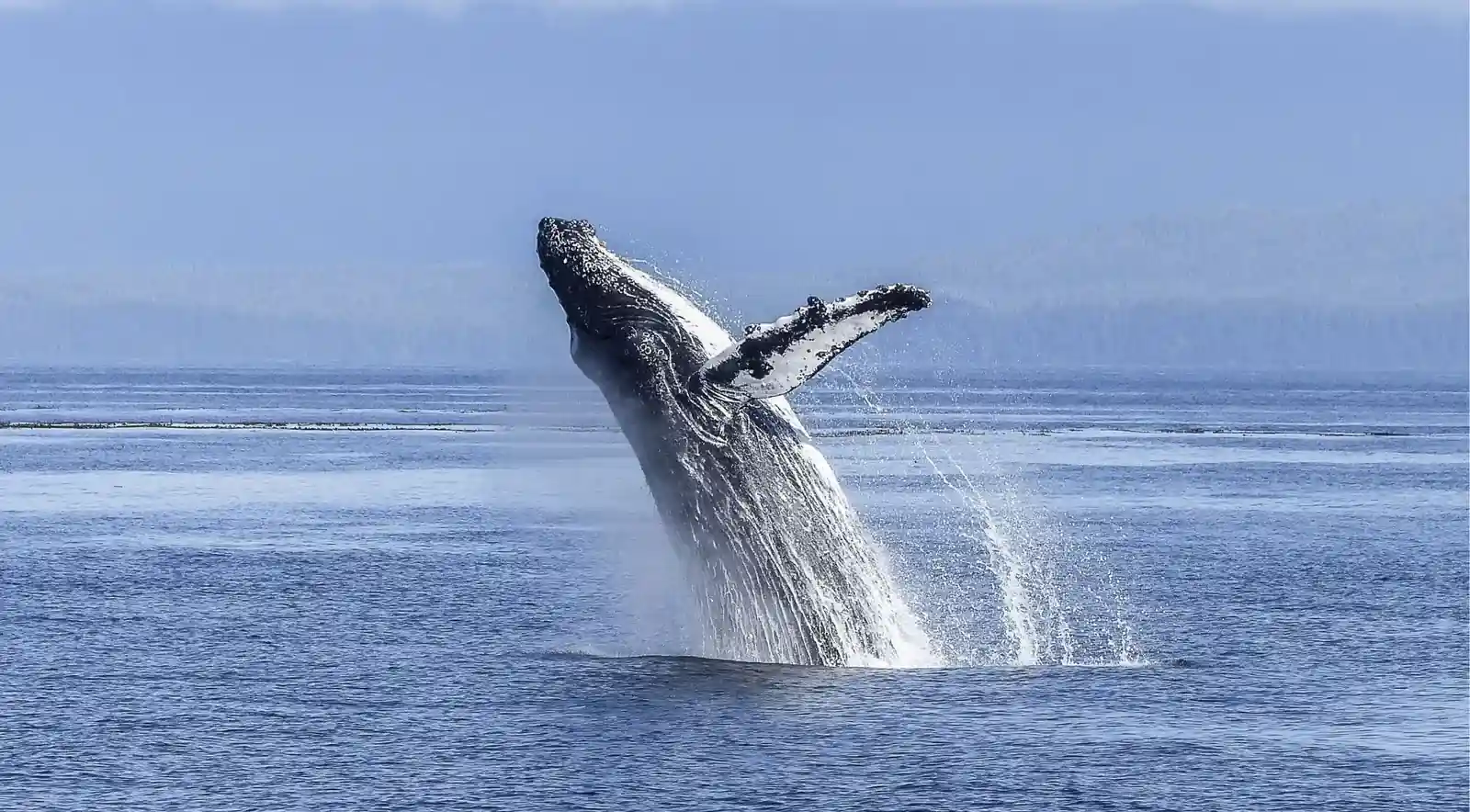
The short version
- Vancouver Island is the best whale-watching destination in Canada, with three world-class hotspots: Victoria (orcas and humpbacks, year-round, 95%+ summer sighting rates), Tofino/Ucluelet (gray whales in spring, humpbacks in summer), and Telegraph Cove/Johnstone Strait (Northern Resident orcas mid-July to mid-September).
- Getting there from Vancouver: BC Ferries runs the 1h35m Tsawwassen–Swartz Bay (Victoria) crossing and ~2h Tsawwassen–Duke Point (Nanaimo) route; Harbour Air floatplanes reach downtown Victoria in ~35 minutes.
- Peak whale season is May–October; build a 3–5 day itinerary combining Victoria, Cathedral Grove and Tofino/Ucluelet, and book ferries, tours and Hot Springs Cove trips well in advance.
Vancouver Island as a Destination
Vancouver Island is the largest island on the Pacific coast of North America — roughly 460 km long, up to 100 km wide, about 31,285 km² in area. It's divided into four main tourism regions:
- South Island / Greater Victoria — the provincial capital, Butchart Gardens, the Inner Harbour, coastal trails. Best for first-time visitors.
- Cowichan Valley — wineries, farms, Duncan, Chemainus.
- Central Island — Nanaimo, Parksville, Qualicum Beach; family beaches and a central touring base.
- Pacific Rim / West Coast — Tofino and Ucluelet via Highway 4; surfing, storm watching, Pacific Rim National Park.
- North Island — Campbell River, Telegraph Cove, Port McNeill, Alert Bay, Port Hardy; orca waters and First Nations culture.
Whale Watching: Location by Location
Victoria (South Island / Salish Sea). The most popular whale-watching base on the island, with the largest fleet of operators. 3-hour tours run from the Inner Harbour. Peak season May–October; sighting success ~95–98%. Species: Bigg's (transient) orcas (year-round, increasingly common), humpback whales (April–November), minke and gray whales, porpoises, sea lions and seals. Victoria is also the main base for winter whale watching from November to March.
Tofino & Ucluelet (Pacific Rim / West Coast). Year-round tours into Clayoquot Sound and Barkley Sound. Species: gray whales (peak March–April migration; a resident summer group stays in Clayoquot Sound), humpbacks (May–September), and occasional orcas. The Pacific Rim Whale Festival (March 14–21, 2026) celebrates the gray whale migration, and Ucluelet's Wild Pacific Trail offers shore-based whale watching from Amphitrite Point. Boat tours depart from Tofino's Marine Adventure Centre and work the same Clayoquot and Barkley Sound waters that Ucluelet-based operators also fish for whales.
Other Things to Add to Your Vancouver Island Trip
Pair your island whale watching with more of the Salish Sea — a Vancouver whale watching tour from Granville Island before you cross, a visit to Butchart Gardens, or a trip out to Tofino, Telegraph Cove and Campbell River for gray whales and Northern Resident orcas.
Telegraph Cove & Johnstone Strait (North Island). The "orca highway." Johnstone Strait is one of the best places in the world to see orcas. Each summer, Northern Resident orcas follow the salmon run to the Robson Bight (Michael Bigg) Ecological Reserve, where orcas famously rub on pebble beaches. Best time: mid-July to mid-September. Also seen: humpbacks, Bigg's orcas, Pacific white-sided dolphins in pods of 100+, and sea otters. Note: the Telegraph Cove Whale Interpretive Centre was damaged in a 2024 fire — verify facility status before visiting.
Campbell River (Discovery Passage). Another gateway to the same Northern Resident and Bigg's waters — Campbell River on eastern Vancouver Island runs longer 4–6 hour trips deeper into Johnstone Strait and the Discovery Islands, a strong alternative to Telegraph Cove with excellent humpback and orca odds in summer.
The Whales: Species & Timing
Bigg's (transient) orcas — mammal-hunters, present year-round, increasingly common. Roughly 380–400 animals in coastal BC.
Southern Resident killer whales — 74 whales as of the July 2025 census (J, K, L pods). Endangered and protected by a 1,000 m approach minimum; tours do not target them.
Northern Resident killer whales — 310+ animals (the most recent published DFO total was 332 in 2021, growing roughly 2% a year). Best seen at Johnstone Strait mid-July to mid-September.
Humpback whales — June–October; best in September for acrobatics. Population growing strongly.
Gray whales — spring migration March–May along Vancouver Island's west coast. The eastern North Pacific gray whale population has declined to roughly 13,000 (NOAA 2024/2025 estimate), the lowest since the 1970s.
Minke whales — June–October, most often seen near Victoria and the North Island.
Getting to Vancouver Island From Vancouver
BC Ferries. Tsawwassen → Swartz Bay (for Victoria): ~1h35m sailing, adult foot passenger ~$18–21 one-way, standard vehicle ~$89 one-way. Tsawwassen → Duke Point (for Nanaimo/Tofino): ~2 hours. Horseshoe Bay → Departure Bay (for Nanaimo, North Shore convenience): ~1h40m. The Hullo fast passenger ferry runs downtown Vancouver to downtown Nanaimo in ~75 minutes. Vehicle reservations are strongly recommended June–September.
Floatplanes & helicopters. Harbour Air flies Vancouver Harbour to Victoria's Inner Harbour in ~35 minutes, and Vancouver to Tofino in under an hour. Helijet helicopters take a similar time and are more weather-resilient. Floatplanes carry an ~25 lb (11 kg) baggage limit and are weather-dependent.
Driving from Nanaimo to Tofino: ~315 km / 4.5 hours via Highway 4.
Top Things to Do Beyond Whale Watching
Tofino. 35+ km of beach breaks and surf schools for all levels. Hot Springs Cove is a 1.5-hour boat ride plus a 2 km boardwalk hike to geothermal pools — a roughly 6-hour day best booked well ahead. Bear-watching tours run April–October, and the Meares Island Big Tree Trail passes cedars up to 1,500 years old.
Pacific Rim National Park Reserve. Three sections: Long Beach, the Broken Group Islands (kayaking), and the multi-day West Coast Trail. Day pass ~$11/adult.
Cathedral Grove (MacMillan Provincial Park). Douglas firs over 800 years old and 75 m tall, on Highway 4 between Parksville and Port Alberni. Arrive early — parking is very limited.
Butchart Gardens. A 55-acre National Historic Site near Victoria drawing about a million visitors a year. Summer adult admission $44.25, with lower spring/fall pricing and summer Saturday fireworks.
Wild Pacific Trail (Ucluelet). A roughly 9 km coastal trail past the Amphitrite Point lighthouse — excellent for shore-based whale and storm watching.
Strathcona Provincial Park. BC's oldest park, with the Elk Falls suspension bridge, Della Falls and alpine lakes.
First Nations cultural experiences. The U'mista Cultural Centre (Alert Bay) holds the renowned Kwakwaka'wakw Potlatch Collection; the Quw'utsun' Cultural Centre (Duncan) is another highlight. Indigenous-owned operators include Ahous Adventures (Tofino) and Homalco Wildlife & Cultural Tours (Campbell River).
Wildlife on land. Around 7,000 black bears — one of the densest populations anywhere — plus the highest concentration of cougars in North America, Roosevelt elk, Vancouver Island wolves, the endangered Vancouver Island marmot, and reintroduced sea otters.
Best Places to Stay
- Victoria — best for first-timers; walkable, most to do nearby.
- Tofino & Ucluelet — for beaches, surf and storm watching.
- Nanaimo & Parksville/Qualicum Beach — the best practical hub for day trips north or south.
- Campbell River & North Island — best for wildlife-focused trips toward Telegraph Cove.
Sample Itineraries
3 days: Day 1 — Victoria's Inner Harbour, Parliament, Royal BC Museum. Day 2 — Butchart Gardens and Brentwood Bay. Day 3 — Cathedral Grove and Nanaimo before returning.
5 days: Add Day 4 — drive to Tofino for surfing and Long Beach. Day 5 — the Wild Pacific Trail in Ucluelet and Pacific Rim National Park.
7+ days: Add Telegraph Cove for orca watching and Strathcona Provincial Park.
Practical Tips
- Car vs. tours: renting a car gives maximum freedom. For a Victoria-only trip, an organized bus-and-ferry tour or floatplane is simpler.
- Ferry booking: reserve vehicle space in advance for summer and holiday weekends.
- Best season: May–October for whale watching overall. March–April for gray whales on the west coast. Mid-July to mid-September for Northern Resident orcas at Telegraph Cove.
- On the water: morning departures mean calmer seas. Dress warmly even in summer, and bring Gravol if you're susceptible to seasickness.
- Book early: Tofino's Hot Springs Cove trips and west-coast accommodations sell out fast in summer.